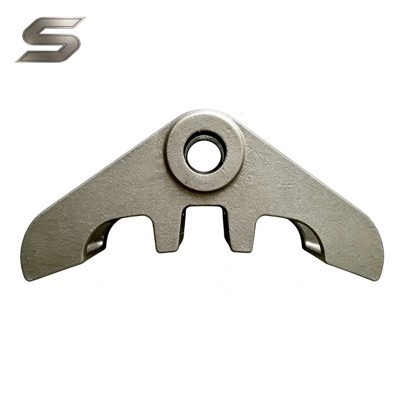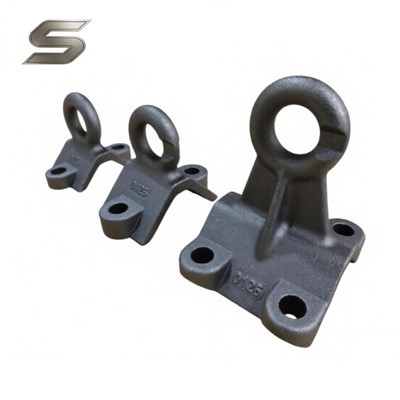



| Item Name | Non-Standard Cast Iron Pulley |
| Casting Process | Lost Foam Casting (Full Mold Casting), Resin Sand Casting, Shell Molding |
| Grade | EN-GJL-200 (GG20),Class 40,EN-GJL-250 (GG25),Class 50,EN-GJS-450-10 (GGG45),65-45-12,EN-GJS-500-7 (GGG50),80-55-06,HT200,HT250,QT450-10,QT500-7 |
| Custom Outer Diameter Range | φ50mm–φ1200mm, fully customized for all non-standard sizes |
| Belt Groove Types | V-groove, flat belt groove, timing toothed groove, integrated multi-groove combined structure |
| Machining Tolerance of Shaft Bore | H7/H8 precision boring tolerance, compatible with standard shafts and custom non-standard shafts |
| Surface Treatments | phosphating, anti-rust primer, black anti-rust paint |
| Basis for Custom Production | Customer engineering drawings / Reverse molding via 3D scanning of physical samples |
| Operating Temperature Range | -20℃ ~ 100℃, dimensions keep stable during long-term continuous operation |
| Mechanical Properties | Tensile strength of grey cast iron ≥200MPa; Tensile strength of ductile iron ≥450MPa |
| Balance Treatment | Dynamic balance G6.3 ISO 1940 for high-speed working conditions |
| MOQ Policy | Small-batch trial orders for new product R&D & mass OEM volume orders are both acceptable |
Advantages of Non-Standard Cast Iron Pulleys Manufactured by Shata Machinery
Shata Machinery possesses 18 years of experience in manufacturing Non-Standard Cast Iron Pulley, we support expert mold design, skilled workforce, and superior problem-solving capabilities--all of which ensure an enhanced customer experience.
Key features include:
Custom structural design, free from standard part limitations:
Light-load, high-speed models can be designed with lightweight, hollow, thin-spoke configurations; for mining and heavy-duty conveying equipment, solid, fully plated, thickened heavy-duty pulleys can be custom-made.
Integrated casting via the Lost Foam process; ideal for complex, irregular shapes:
Complex geometries-including multi-groove designs, flanges, locating steps, and hollow spokes-are created from a single foam pattern. This ensures the pulley is cast as a complete, integral unit requiring no welding, resulting in superior structural strength.
Smooth casting surfaces with minimal machining allowance:
Formed by lost foam casting, pulleys feature smooth, clean surfaces, which reduces the need for subsequent machining and lowers overall costs.
Vibration-dampening and wear-resistant for long-term durability:
We utilize premium materials combined with the natural graphite structure of cast iron, ensuring our non-standard cast iron pulleys are exceptionally durable.
Material options tailored to light-duty and heavy-duty operating conditions:
Materials can be selected based on operating requirements, ranging from gray iron (HT200/HT250) to ductile iron (QT450-10/QT500-7). Shata Machinery can also adjust alloy compositions to meet specific tensile strength and vibration resistance requirements.
Dynamic balancing available for stable, high-speed operation:
For pulleys used in fans, high-speed textile machinery, and high-speed packaging equipment, we offer dynamic balancing to eliminate eccentricity, thereby preventing high-speed vibration and belt misalignment.
Reliable batch delivery and superior cost-efficiency compared to welded pulleys:
We operate large-scale, fully automated Lost Foam production lines, ensuring consistent dimensions across batches and a stable supply.


What types of Non-Standard Cast Iron Pulley can Shata Machinery manufacture?

Custom Single/Double/Multi-Groove V-Belt Pulleys
Customizable groove count, spacing, and depth; designed for synchronous drive systems using multiple V-belts.

Custom Wide Flat-Belt Pulleys
Widened pulley face with custom outer diameter and width; suitable for flat-belt conveyor lines handling sheet materials or bulk goods.

Custom Synchronous (Toothed) Pulleys
Precision-molded with specific tooth counts, profiles, and outer diameters; designed for precision positioning drive systems.

Precision-molded with specific tooth counts, profiles, and outer diameters; designed for precision positioning drive systems.
Hollow-spoke structure reduces weight; ideal for high-speed, light-load applications in textiles, packaging, and small agricultural machinery.

Heavy-Duty Custom Pulleys with Solid Hubs and Solid Web Plates
Features a thickened solid hub and a solid web plate (no cutouts) for high load-bearing capacity; designed for mining, heavy-duty conveying, and lifting equipment.

Special-Profile Custom Pulleys
Incorporates special features such as positioning flanges, retaining steps, or mounting bosses; custom-developed based on client-specific equipment drawings or samples.
The complete production process for non-standard cast iron pulleys using the lost foam casting method at Shata Machinery.
We will review customer drawings for non-standard cast iron pulleys; if no drawings exist, the physical part is scanned to generate a 3D model via reverse engineering. During this process, Shata Machinery engineers offer practical design recommendations-such as increasing wall thickness to minimize casting defects-thereby helping the customer save time.
CNC cutting or foam molding the complete pulley pattern based on drawings, followed by assembly and bonding of the foam sections.
Evenly applying a high-temperature resistant refractory coating to the interior and exterior of the foam pattern, followed by drying and curing.
Placing the foam pattern into a flask, filling it with dry sand, and vibrating to compact the sand and secure the pattern.
Pouring molten iron under vacuum conditions; the foam pattern vaporizes and disappears as the molten iron fills the mold cavity to form the part.
Allowing the casting to cool naturally, then shaking out the mold to separate the dry sand from the finished casting.
Removing the refractory coating and minor burrs to reveal the natural metal surface.
Eliminating internal casting stresses to prevent deformation during subsequent machining and service.
Boring the shaft hole, turning pulley grooves, milling keyways, and performing dynamic/static balancing.
Checking hardness, dimensions, and runout.
FAQ
Can complex, multi-groove pulleys be cast as a single, integrated unit?
A: Yes. The advantage of the lost foam casting process is that it allows for the integral molding of complex structures; single-groove, double-groove, and multi-groove (V-belt) designs can be cast as one piece without the need for separate casting or welding, resulting in higher structural strength.
What are the application differences between hollow-spoke pulleys and solid-web (full-plate) pulleys?
A: Hollow-spoke pulleys are lightweight with low rotational inertia, making them suitable for high-speed, light-load transmission in textile and packaging machinery. Solid-web pulleys offer higher load-bearing capacity, making them ideal for heavy-duty equipment used in mining and lifting operations.
What advantages do lost foam pulleys offer over those made using pre-coated sand or resin sand casting?
A: Complex multi-groove and irregular flange structures do not require mold splitting, and the foam pattern molding cycle is short. The castings have smooth surfaces, eliminating the need for extensive grinding, which results in faster delivery times for small-to-medium batch, non-standard orders.
What is your minimum order quantity (MOQ)?
A: The minimum order quantity is 1 unit. We accept sample orders, small-batch orders, and large-scale production orders.
Is lost foam casting mandatory?
A: No. If you do not specify a casting process for your non-standard cast iron pulley, we offer multiple production lines-including lost foam and sand casting-for you to choose from. If you are unsure which process is most suitable, we can recommend the best production method based on your budget, operating conditions, and technical specifications.
Please contact us if you have any further questions; our engineers would be happy to discuss casting-related matters with you.

Hot Tags: non-standard cast iron pulley, China non-standard cast iron pulley manufacturers, suppliers, factory, lost wax sand casting, precision investment services