
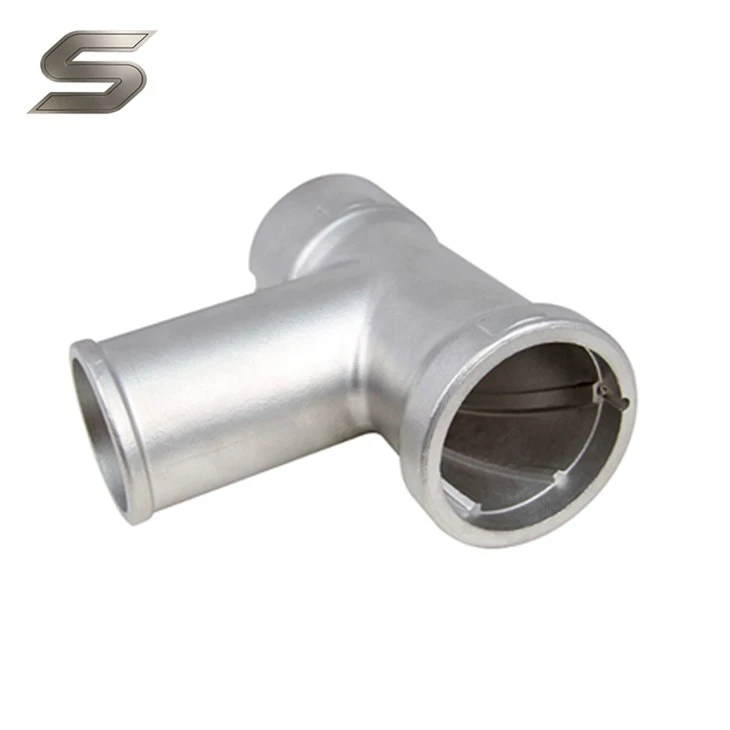
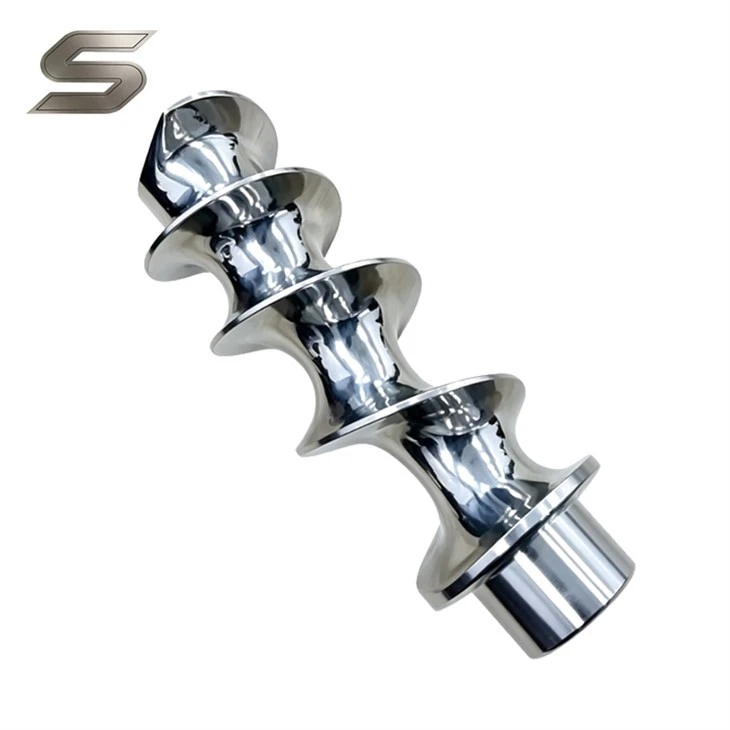
Procurement Guide for meat grinder stainless steel castings
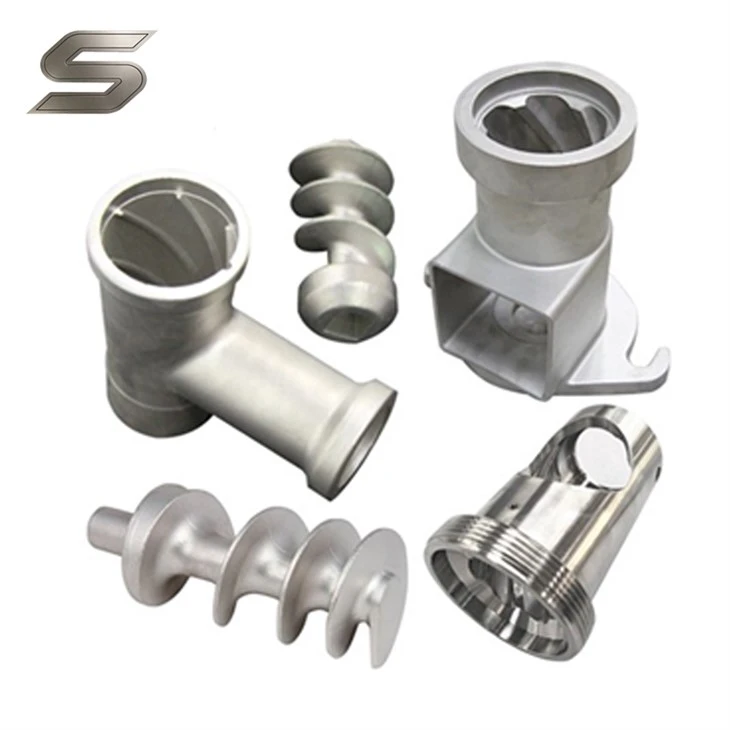
As a professional supplier of stainless steel castings, when you need to purchase and customize parts for a meat grinder, simply providing us with product images, dimensions, or required unit weights is insufficient to obtain an accurate production plan. Because the location of the parts, food contact conditions, material grade, and required processing tolerances all affect the final product you purchase, this article provides a purchasing guide for your reference
Core Advantages
Strict Stainless Steel Raw Material Control
We strictly limit the content of harmful heavy metals such as lead, cadmium, and arsenic in our stainless steel parts. Actual testing shows Pb≤0.003%, Cd≤0.002%, and As≤0.003%. This ensures the purity of the effective elements and guarantees absolute safety in food contact.
01
No Porosity or Shrinkage Cavities
Our castings undergo segmented slow heating and uniform cooling, eliminating porosity and shrinkage cavities. This results in a longer service life and fewer maintenance requirements.
02
Precision CNC Machining
Low-noise operation. All internal and external edges are precisely rounded to remove burrs and sharp corners, preventing vibration noise from metal scraping.
03
Three-Step Composite Polishing
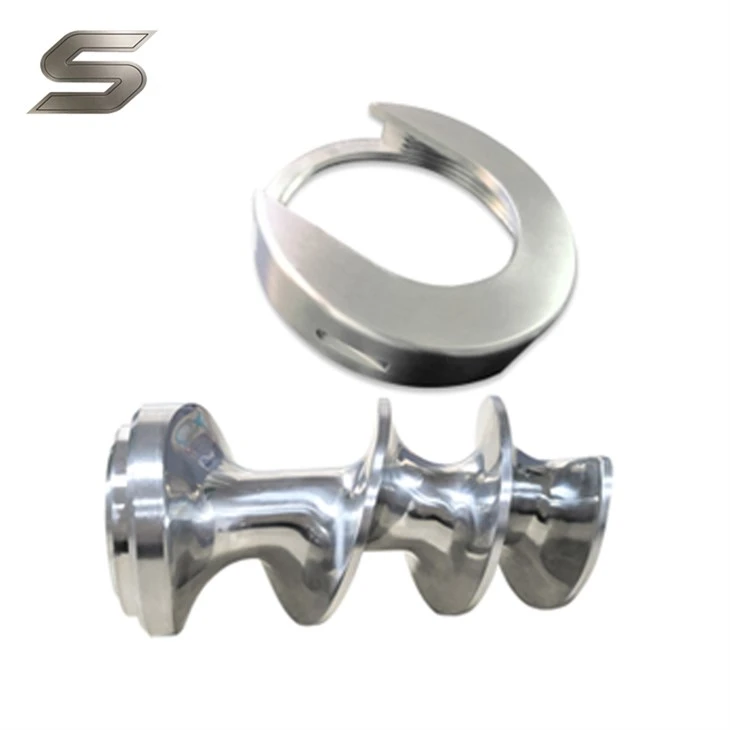
The surface is non-sticky, with rough grinding to remove burrs, followed by fine surface treatment and polishing. These three progressive processes ensure a smooth surface free of dirt and prevent meat residue from adhering, making cleaning easier.
04


304 VS 316 Stainless Steel Comparison Table
Meat grinder stainless steel castings can use 304 and 316 stainless steel. The specific differences between the two are as follows
|
Comparison Item |
304 |
316 |
|
Typical Composition |
Cr≈18% Ni≈8% Mo |
Cr≈16% Ni≈10% Mo≈2–3% |
|
Casting Grade Corresponding |
CF8 / SCS13 |
CF8M / SCS14 |
|
Resistance to General Corrosion |
Good, suitable for water, general food, low-salt environments |
Better, significantly upgraded resistance to acids, alkalis, and chloride salts |
|
Resistance to Salt, Pickling, and Seafood Environments |
Average, prone to pitting corrosion and rust in coastal, high-salt, and waterlogged environments |
Excellent, molybdenum significantly improves pitting corrosion resistance
|
|
Resistance to Salt, Pickling, and Seafood Environments |
Not recommended for long-term contact with high salt |
Suitable for high-salt scenarios such as pickled meat, salted meat, and seafood processing |
|
Food-grade Compliance Basic food contact grade |
high cost-performance ratio |
higher specifications |
Introduction to Surface Treatment of meat grinder stainless steel castings
Surface treatment of stainless steel parts is not just about improving appearance; different surface conditions affect the ease of cleaning, assembly feel, durability, and overall visual appeal of the equipment. Therefore, we pay special attention to the surface treatment of these stainless steel castings. Below are the detailed names and advantages of each treatment.
|
Surface Finishing |
Main Features |
Suitable Parts or Areas |
|
Shot Blasting |
Creates a uniform matte finish on stainless steel parts, suitable for cleaning casting surfaces and improving overall consistency. |
Suitable for non-critical appearance areas, casting surfaces before subsequent processing, and non-food contact areas inside equipment. |
|
Brushing |
Creates a directional metallic texture, resulting in a more stable appearance and less prone to showing minor scratches. |
Suitable for exposed machine bodies, operating handles, covers, and parts requiring an industrial look |
|
Mechanical Polishing |
Improves surface smoothness, reducing burrs and localized roughness. |
Suitable for food contact areas, surfaces prone to raw material accumulation, and internal structures requiring cleaning. |
|
Mirror Polishing |
Offers higher gloss and reflectivity, suitable for higher requirements on appearance and surface finish. |
Suitable for high-end equipment display surfaces, areas with relatively high hygiene requirements, or display-type stainless steel components. |
How to Choose Stainless Steel Castings for Pet Food Equipment?
Are you wondering how to choose materials for parts in the pet food industry? Should you choose 304 or 316? What does Ra≤0.8μm for food contact surfaces mean? This article will clearly explain how to choose the right material.
I. Pet Food Equipment Materials
In the United States, pet food is governed by the FDA's Food Safety Modernization Act and its Animal Food Preventive Control Regulations and AAFCO guidelines. The European Union has its own regulations, following the 183/2005 Feed Hygiene Regulation and FEDIAF guidelines. China applies feed hygiene standards such as GB/T 13078. These regulations all require that the surfaces of equipment in contact with pet food must be smooth, corrosion-resistant, and easy to clean. The industry typically uses SUS 304 or SUS 316 stainless steel.
II. Choosing Between 304 and 316?
Based on Food Characteristics
Dry food, low-salt, low-acid formulas, general cleaning scenarios: 304 is sufficient and offers the best cost-performance ratio.
High-meat or wet food formulas, high-salt, high-acid, frequent CIP (clean-in-place) cleaning, high-humidity environments: Choose 316, as the molybdenum content provides better resistance to chloride ion pitting corrosion.
For heavy-duty, wear-resistant parts such as blades, augers, and spiral shafts: Consider choosing a heat-treatable grade like 420, which balances hardness and dimensional stability.
III. Surface Treatment Requirements
Ra≤0.8μm: The surface roughness of food contact surfaces should reach Ra 0.8μm or lower to prevent microbial adhesion.
One-piece molding, no cleaning dead corners: Precision casting with one-piece molding is preferred to prevent meat residue from getting stuck and corroding parts later.
Polishing + Passivation: Mirror polishing reduces meat adhesion, and acid pickling and passivation improve corrosion resistance.
No burrs, no sharp edges: Burrs trap dirt and grime, which may fall off and mix into feed.
IV. Common Selection Misconceptions
Misconception 1: 304 and 316 are similar, choose whichever is more economical. You need to note that in environments containing salt, acid, or chlorine, the lifespan of the two differs significantly. Once pitting occurs, the entire part must be replaced.
Misconception 2: Only looking at the material, not the surface. If the Ra exceeds the standard and the surface is rough, bacteria will still grow, and even high material hardness cannot save it.
Misconception 3: Blindly choosing 316. For ordinary dry food and low-corrosion applications, using 316 stainless steel would only incur a higher premium. Therefore, the goal of reasonable material selection is to match the working conditions, not to choose the most expensive.
Repairing Scratched Stainless Steel Parts
In actual use, you will inevitably encounter scratched parts in your meat grinder. This is very common. Don't rush to repair it yourself, as the repair logic for internal and external parts is different. Follow this guide to better understand the practical application.
1. Food Contact Parts with Shallow Scratches
Core Principle: Remove burrs, but never compromise the fit.
Tools: Use a nylon polishing wheel or 800-1000 grit wet sandpaper.
Operation: Gently pull in one direction along the scratch, only polishing the raised burrs until it feels smooth to the touch and doesn't scratch your hand.
2. Food Contact Inner Cavity with Deep Scratches
Direct Recommendation: Replace with a new part immediately.
Reason: Deep grooves cannot be completely smoothed by polishing. Over-polishing will increase the gap between the screw and the grinding blade, preventing meat from being properly gripped and reducing the meat yield. More seriously, meat residue remaining in the grooves cannot be thoroughly cleaned, easily leading to bacterial growth in summer.
3. Exterior Body and Shell
For brushed surfaces: Use a nylon fiber scouring pad to polish in a straight line in one direction, following the grain of the material. Gradually transition from coarse to fine grit until the scratches are covered by the new grain.
For mirror surfaces: Use polishing paste and a felt wheel, clamping the felt wheel with an electric drill for high-speed polishing. If the scratches are too deep, first smooth them with 2000-grit wet sandpaper before applying polishing paste.
4. Meat Grinder Blade and Cross Blade
Operation: Gently rub the sides of the blades a few times with an oilstone, ensuring that the two blades are pressed firmly together and not translucent. If the blades are scratched and translucent, replace them immediately.

Stable Bulk Supply Capability
1. Sample Production
2. Coordination of Multiple Model Orders
3. Support for Model Changes
4. Consistent Appearance and Packaging
5. Continuous Supply Communication
Reference time for exporting products by sea
products are typically heavy, so sea freight is the most common mode of transport for bulk exports. Actual shipping time is affected by factors such as the port of destination, shipping route, transshipment arrangements, vessel schedule, and customs clearance efficiency. The following delivery times can be used as a reference for buyers
|
Destination |
Common Ports |
Estimated Delivery Time |
|
Southeast Asia |
Ho Chi Minh City, Laem Chabang, Singapore, etc |
5–12 days |
|
Japan & South Korea |
Yokohama, Busan |
3–8 days |
|
Middle East |
Jebel Ali, Dammam |
18–30 days |
|
Europe |
Hamburg, Rotterdam |
30–45 days |
|
US East & West Coast |
Los Angeles, New York, etc. |
Within 45 days |
|
South America |
Santos, Callao |
Within 45 days |
|
Australia |
Sydney, Melbourne |
Within 30 days |


Hot Tags: meat grinder stainless steel castings, China meat grinder stainless steel castings manufacturers, suppliers, factory