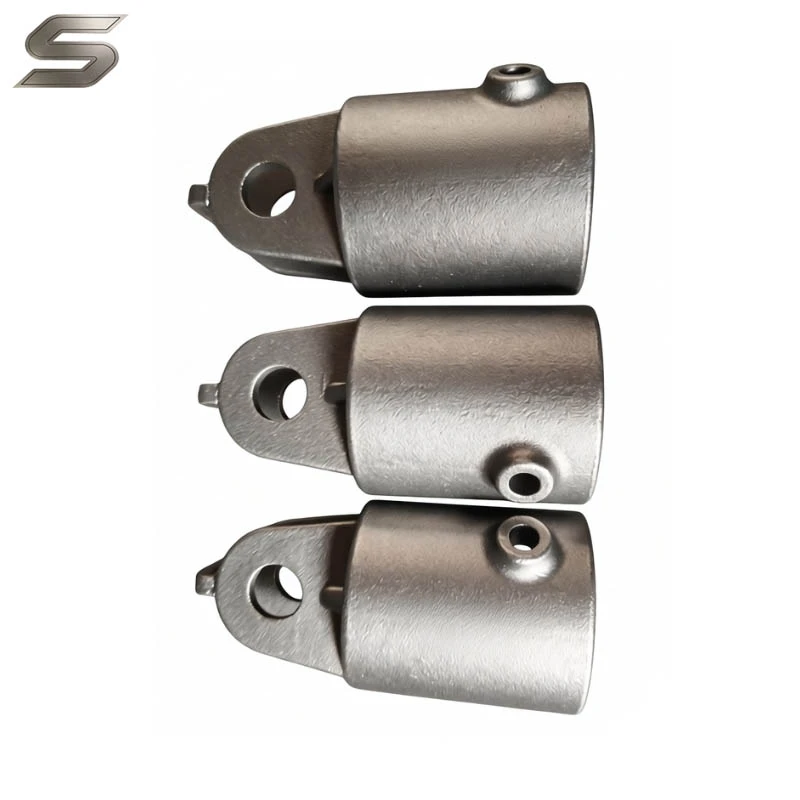

Railway catenary system fittings casting manufacturer - custom cast steel parts
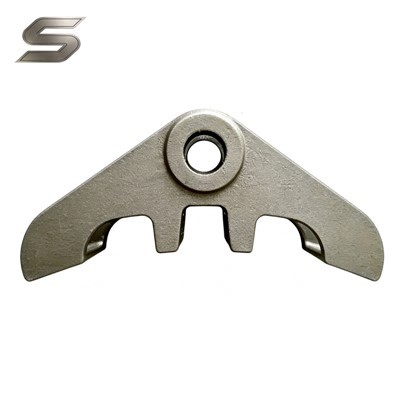
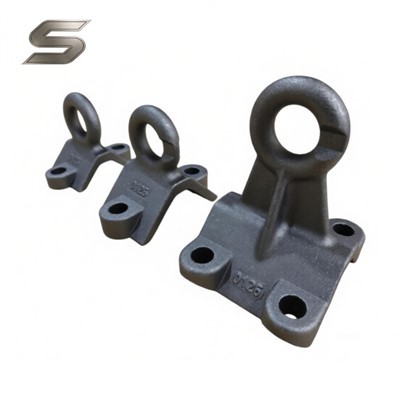
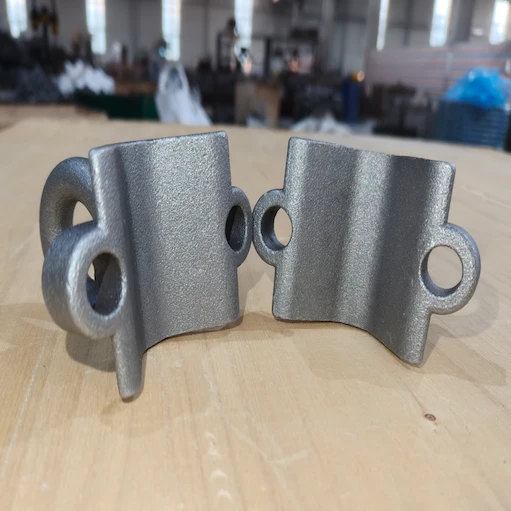
Railway catenary system fittings casting is not a part on the railway track. It is a metal accessory installed above the railway to support and fix the power supply network. It is the most important component of the railway electrification power supply system. With the requirements of low-carbon emission green transportation, more and more EMUs use external grid power supply systems to supply power to the car bodies to achieve energy conservation and emission reduction.
As a senior manufacturer of catenary hardware, Shatta understands the electrification needs of railway systems in many countries and has passed ISO9001, ISO14001 and ISO45001 certifications; material reports can be randomly provided to you for testing. We can customize specialized catenary parts for cast steel railways for you.
Core advantages
High-precision casting to ensure installation coordination
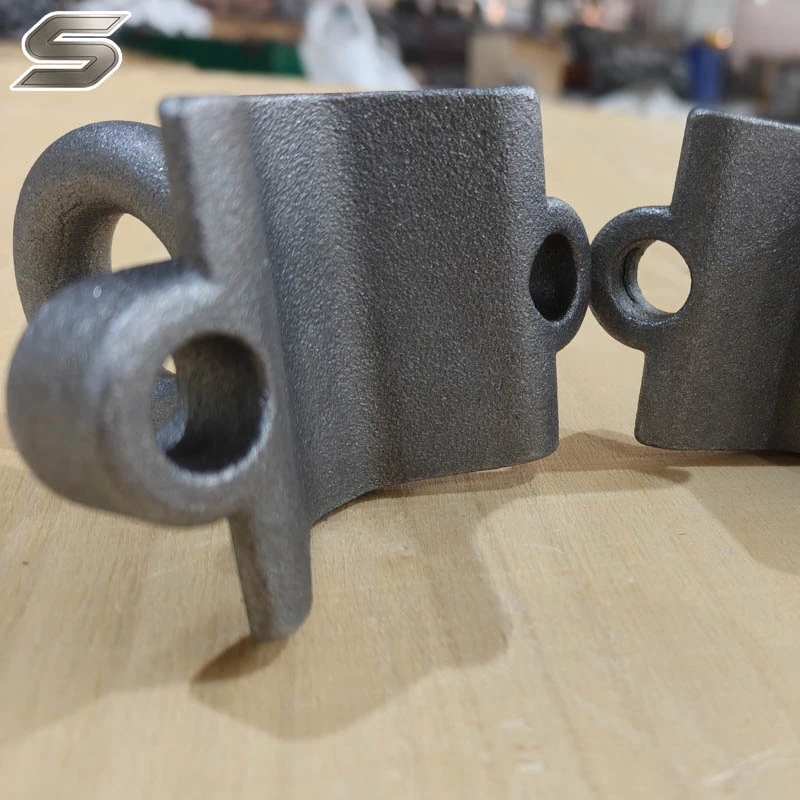
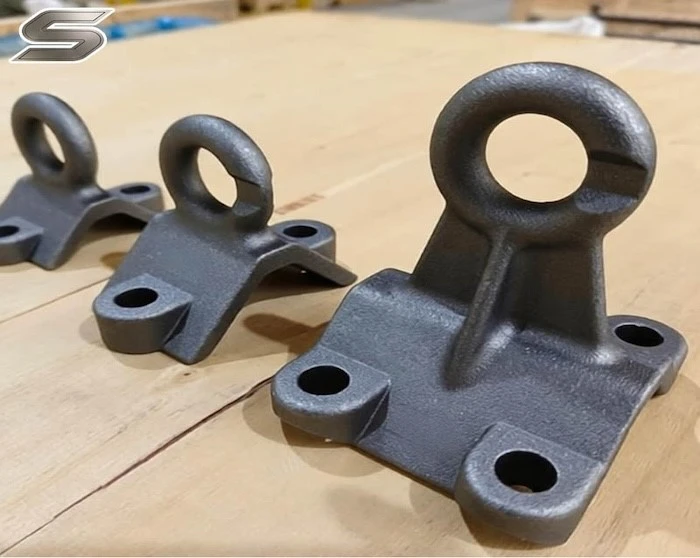
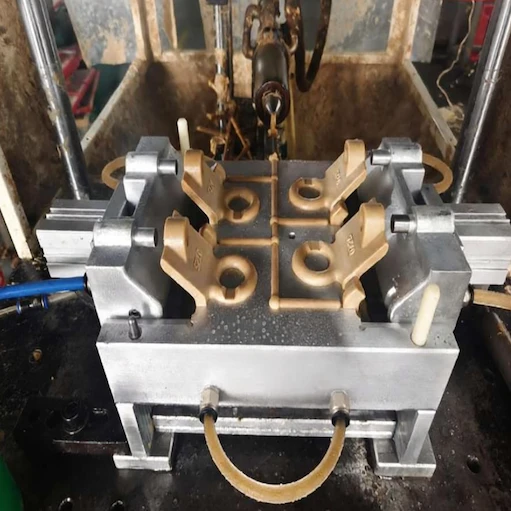
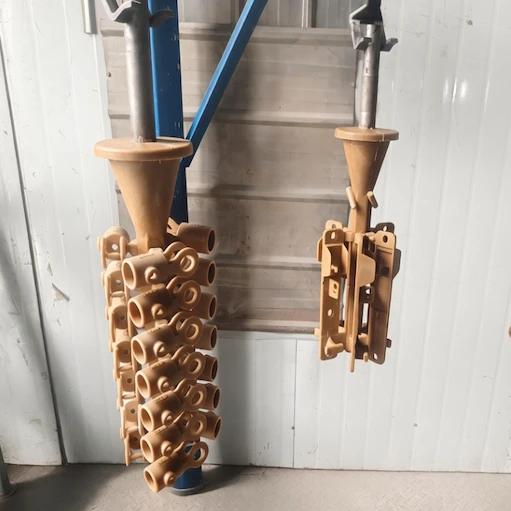
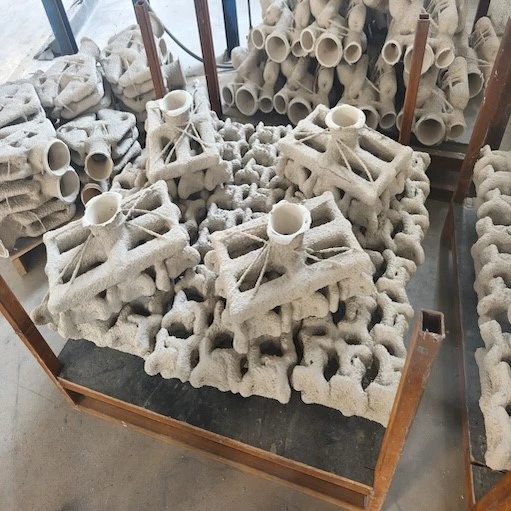
Railway catenary system fittings casting adopts the lost-wax casting process of silica sol and water glass composite shells. The surface layer of silica sol ensures the casting's contour reproducibility and surface quality, and the back layer of water glass ensures the shell strength and molding stability. The internal control accuracy of key function dimensions stably reaches CT4~CT6 high-precision level
Hot-dip galvanizing surface treatment to improve outdoor corrosion resistance
Railway contact wires need to serve in the open air all year round, so they are continuously exposed to more extreme working conditions for a long time. Therefore, after the casting is formed, we use hot-dip galvanizing anti-corrosion process to make the coating dense and have strong adhesion. Extend the working hours of hardware in alpine, coastal and industrial areas.
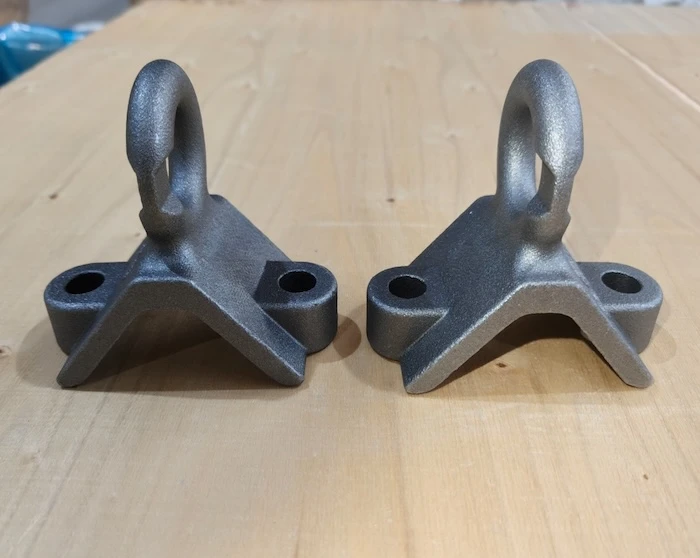
Traceability of materials and mechanical properties
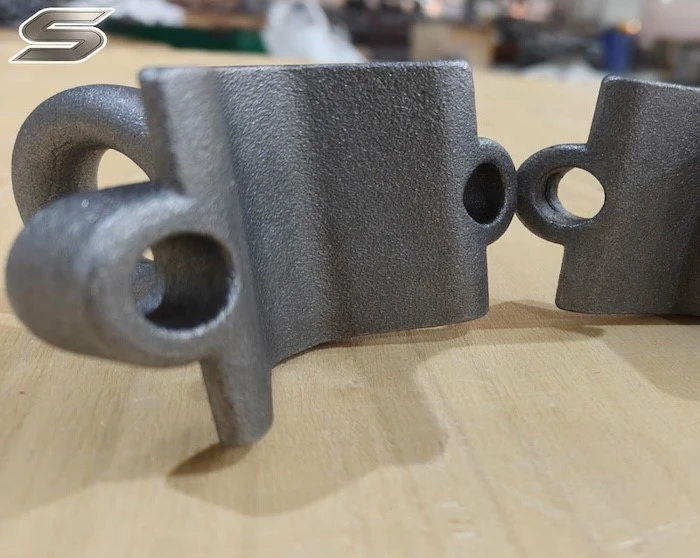
All of Shata's cast steel raw materials enter the factory for inspection, and can provide material spectrum reports and mechanical property testing reports according to your needs, along with test rods and test blocks for each furnace of castings. You can independently take samples for re-inspection to verify the material and mechanical indicators. This is a rigid management requirement for sand towers.
Various types of catenary hardware
The hardware range covers the seven mainstream categories of suspension, positioning, connection, anchoring, compensation, support and electrical connection. Shata can design drawings according to different situations you use, and customize development according to different voltage levels. One-stop support for your basic products, saving your communication costs
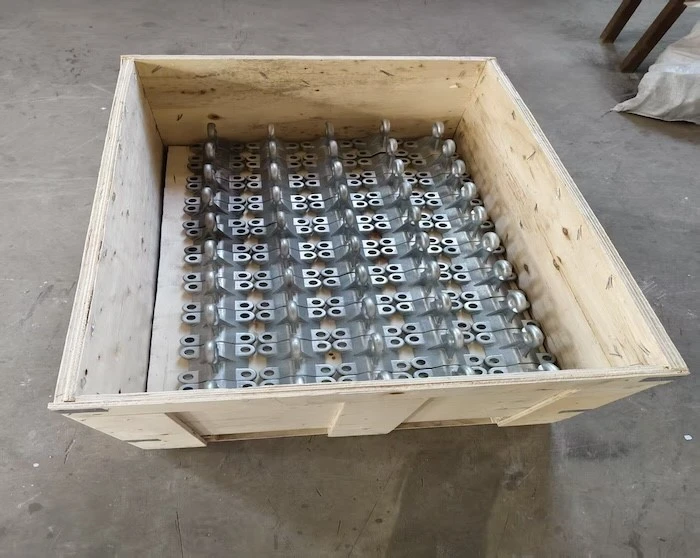
Full category coverage - adapted to the entire system conductive requirements of the catenary
The electrified railway contact network is a continuous force-bearing and conductive system. The suspension, positioning, anchoring, tension adjustment, and conduction of the clues are all realized collaboratively with various cast steel fittings. Therefore, our hardware products cover seven functional groups and can meet your complete set of railway catenary system fittings casting requirements in one stop:
Suspension components: Bear the suspension load of clues and rods, allowing load-bearing cables and hanging strings to hang stably.
Representative products: hook saddles, hanging string clamps, single and double horizontal load-bearing cable clamps.
Positioning component: Constrains the spatial position of the contact line and load-bearing cable to ensure smooth current flow from the pantograph. Representative products: positioning cable clamps, supports, and positioners.
Connection components: realize reliable articulation and docking between different components and transfer mechanical loads.
Representative products: binaural connectors, sleeve hinge rings, connecting plates, and connector clamps.
Anchor components: lock and fix the thread at the end of the line to withstand all the tension of the thread.
Representative products: wedge clamps, terminal anchor clamps, anchors, and line anchor angles.
Compensation component: Adapts to the expansion and contraction of the thread caused by temperature changes, automatically maintains constant tension, and prevents the thread from slackening or breaking.
Representative products: compensation pulley, fixed pulley device, and falling weight rod.
Support component: As the load-bearing base of the wrist-arm system, it supports the entire set of catenary cable structures. Representative products: rotating wrist arm base, rotating wrist arm rod base, and wrist arm.
Electrical connection components: achieve reliable electrical conduction between leads and ensure smooth transmission of current. Representative product: electrical connection clamp.
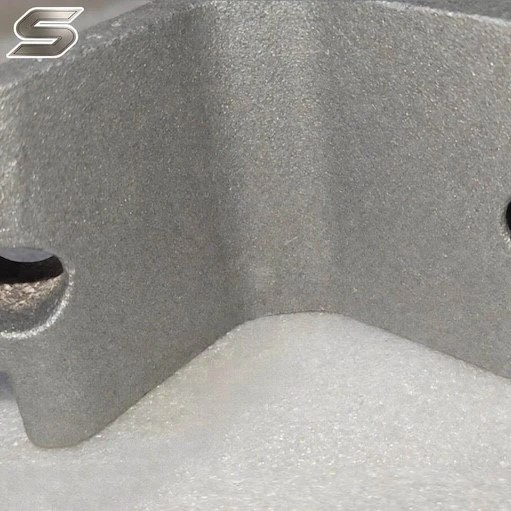
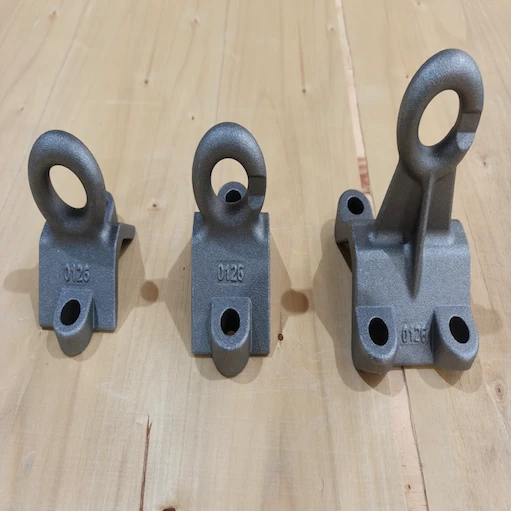
ZG270-500\ZG310-570 cast steel materials and properties
The material of railway catenary system fittings casting is cast steel, mainly ZG270-500 and ZG310-570 grades. Can be applied to correspondingly adapted components
|
Material grade |
Implementation standards |
Yield strength |
tensile strength |
Elongation after break |
impact absorption energy |
Material characteristics and application scenarios |
|
ZG270-500 |
GB/T 11352-2009 |
≥270 |
≥500 |
≥18 |
≥22 |
The most commonly used main material for catenary cast steel fittings; balanced strength and toughness, good casting fluidity, suitable for clamps, connectors, bases, and anchoring parts; can be hot-dip galvanized, and its vibration and fatigue resistance meets the requirements of TB/T2073, and is also the lowest standard approved grade |
|
ZG310-570 |
GB/T 11352-2009 |
≥310 |
≥570 |
≥15 |
≥15 |
Higher strength, suitable for anchoring and compensation hardware that can withstand large loads and high tensions (wedge clamps, terminal anchor clamps, compensation pulleys); suitable for line conditions that require higher damage loads |
High-precision contact hardware - Can reduce overall costs by 40%!
Shata mainly uses the composite lost-wax process of silica sol and water glass to cast railway catenary system fittings casting. This process can reduce your overall cost by 40% while ensuring accuracy and surface smoothness. Its working principle is as follows
|
Layered manufacturing |
Materials used |
|
Surface layer |
layer silica sol and zircon powder |
|
Back reinforcement layer |
water glass and aluminum-silicon refractory sand |
The silica sol in the surface layer first ensures the surface quality and creates an anti-sand adhesion effect. Secondly, the water glass is used in the cover layer to achieve a rapid solidification effect, effectively reducing costs and improving shell production efficiency.
The surface quality of this composite process is much greater than that of pure water glass, because the silica sol surface layer has high refractoriness and stable sintering, and is not prone to sedimentation, sand, pitting, etc. The water glass on the back layer relies on chemical hardening, which is much faster than pure silica sol. Therefore, the railway catenary fittings cast using the secondary casting method have the following characteristics
1. Few surface defects and the ability to work outdoors for a long time
2. Ability to produce net shapes of complex structures without the need for secondary processing
3. Can be mass produced to match railway collection and construction schedule requirements
4. The cost is controllable and the product is very cost-effective
CT4–CT6 and 100% go-no-go gauge testing
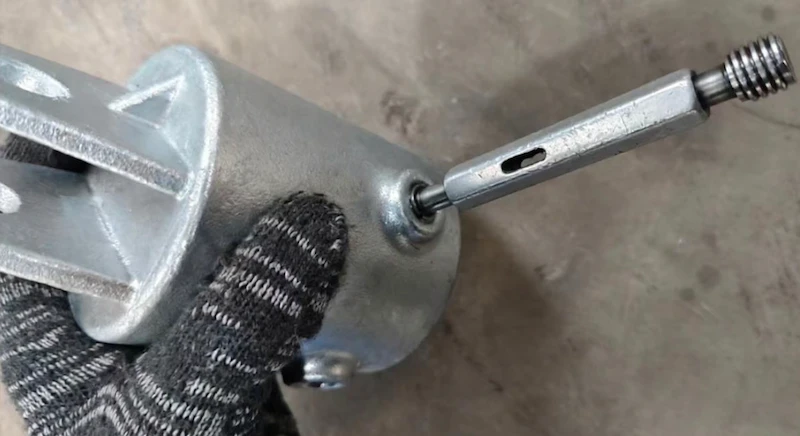
Due to the working performance and working environment requirements of castings, they must have high-precision capabilities. Therefore, Shata pays special attention to the accuracy level of railway catenary hardware. We internally control its key matching dimensions to reach the CT4~CT6 high-precision level of GB/T6414. Core dimensions such as assembly benchmarks are subject to 100% pass-and-stop inspection piece by piece to ensure that the contours and fitting clearances of single pieces are highly uniform.
After the casting is formed, hot-dip galvanizing is used for surface anti-corrosion treatment. Due to the strong bonding force and complete and even coverage of the coating, the hardware can resist corrosion and fatigue for a long time no matter what kind of outdoor working environment it is, such as rain, snow, salt spray corrosion and huge outdoor temperature differences. This is Shata's requirement for product quality and the guarantee for customer use.
Hot Tags: railway catenary system fittings casting, China railway catenary system fittings casting manufacturers, suppliers, factory, carbon steel investment casting, investing and casting, investment casting at home, investment molding, large investment castings, metal casting investment