


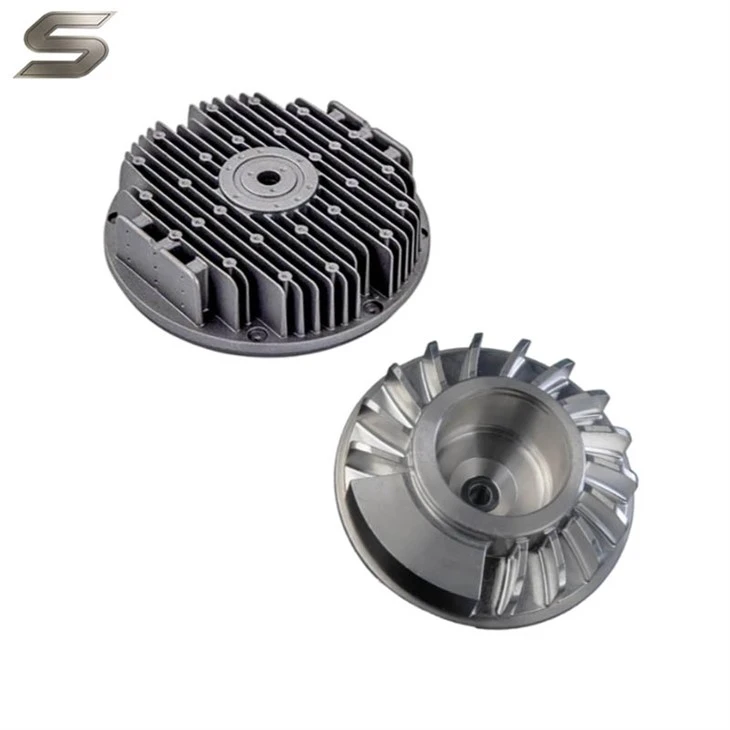
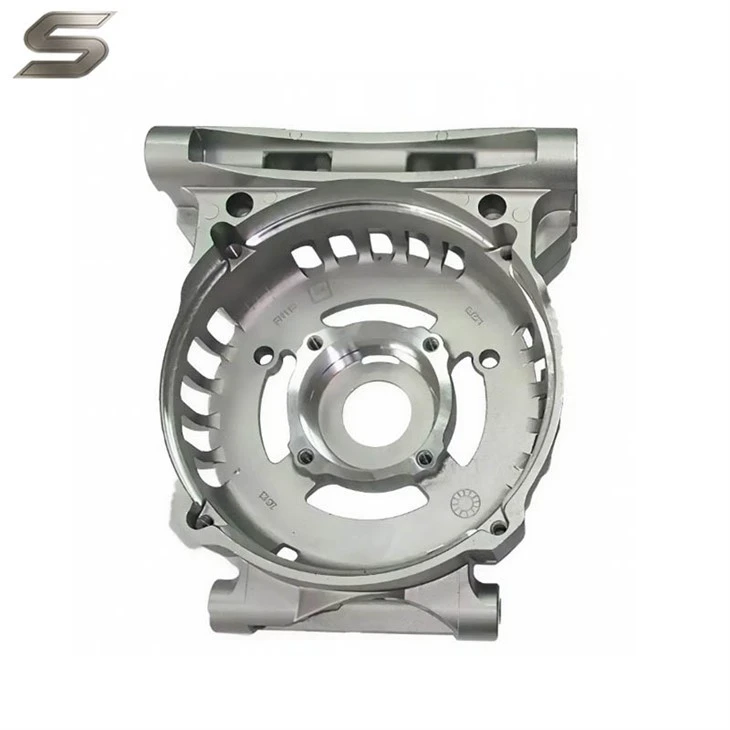
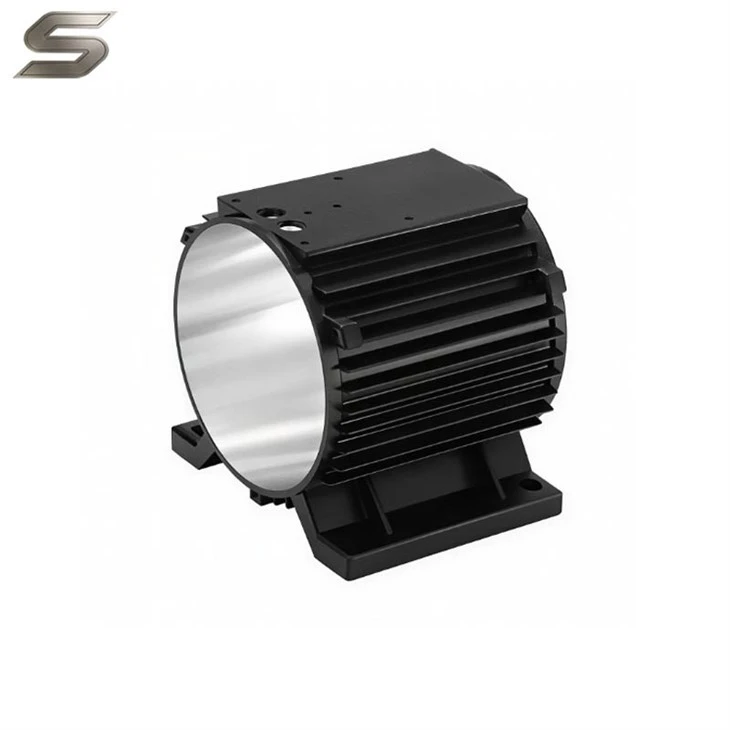
Motor Housings and Aluminum Die Casting Motor Housing
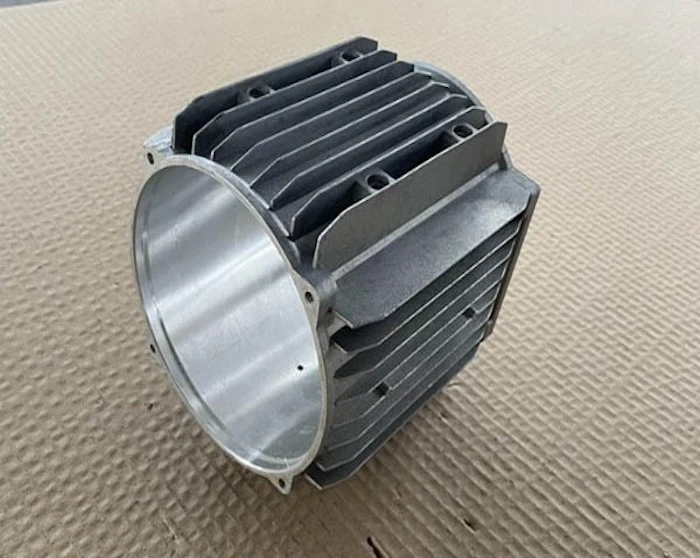
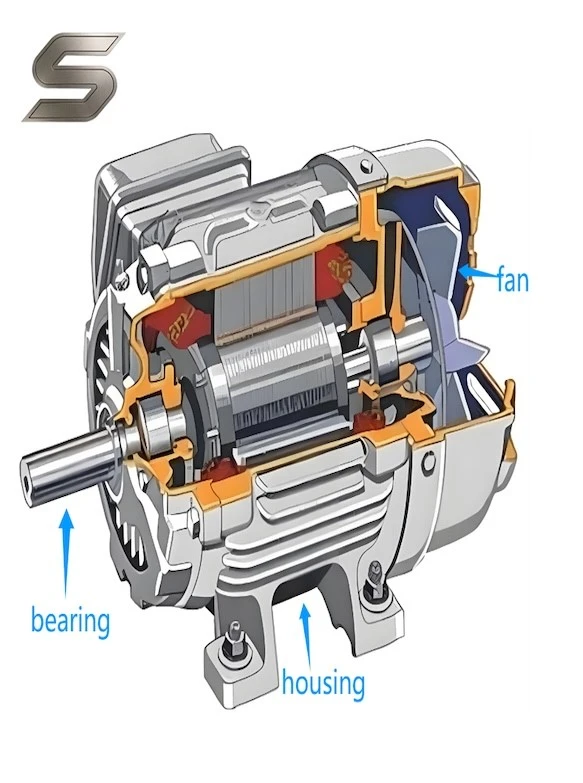
A motor housing serves as the external main component of an electric motor, enclosing internal parts such as the stator, windings, and rotor. It functions to provide structural support, protection, heat dissipation, noise reduction, and electromagnetic shielding. Aluminum Die Casting Motor Housing is manufactured using aluminum alloy via a high-pressure die-casting process. Subsequent precision machining is performed on the internal cavity, mounting surfaces, and other features. This type of housing is particularly well-suited for motors used in pumps produced in large volumes.
Key Advantages of Aluminum Die-Casting Motor Housing
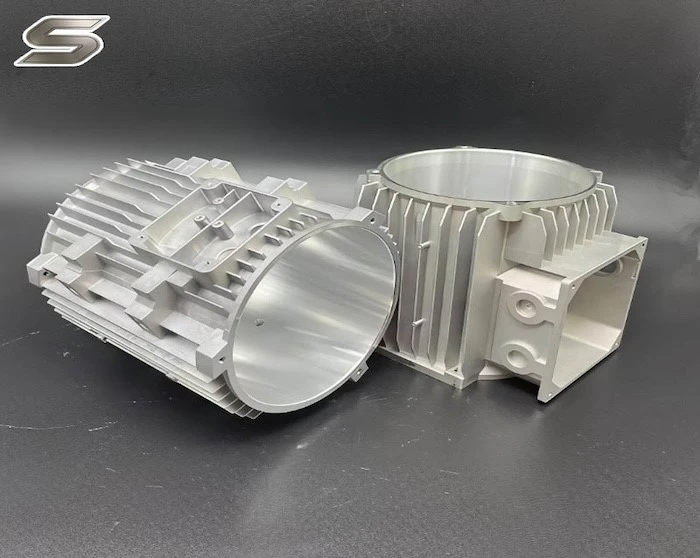
Effective Thermal Management to Suppress Temperature Rise
Aluminum alloy possesses inherently superior thermal conductivity compared to cast iron. With integrated cooling fins-metallurgically bonded to the motor frame-there is no interfacial thermal resistance. This allows for the continuous dissipation of heat generated by the stator windings, mitigating temperature increases during prolonged operation, protecting insulation layers and bearing assemblies, and enabling long-term, uninterrupted service.
Weight Reduction and Optimized System Load
VivaCompared to cast-iron frames of the same power rating, these housings can reduce weight by 40%–60%. This lightweight design lowers the overall weight of the end-use equipment-making it ideal for applications such as vehicle-mounted units, servo-driven robotics, and mobile pump sets-while simultaneously reducing assembly loads and logistics/transportation costs.
Integrated Structural Molding to Minimize Assembly Risks
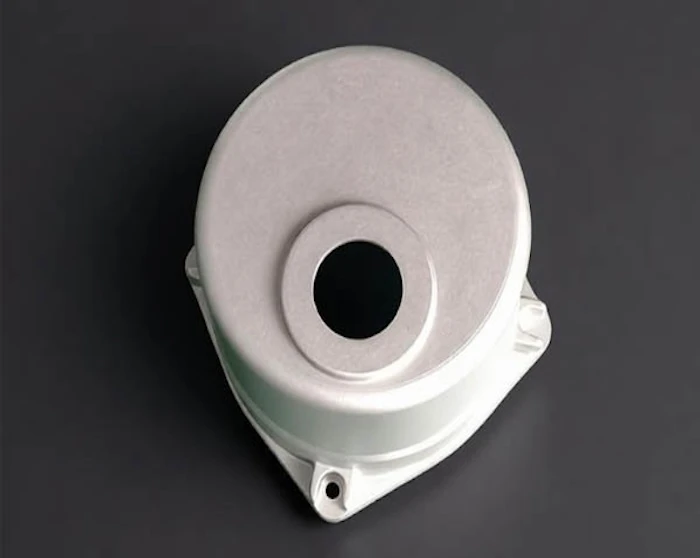
Features such as cooling fins, mounting feet, positioning bosses, cable channels, and oil grooves can be formed as a single, integrated unit during the die-casting process. This eliminates potential sources of error associated with welding or multi-part assembly. In mass production, this ensures high geometric consistency, reducing the likelihood of assembly misalignment or sealing leaks.
Dense, Stable Substrate for Smooth Operation After Precision Machining
High-pressure die-casting produces a denser material structure compared to sand-cast aluminum, with better control over internal porosity and casting defects, and requiring less machining allowance. Following CNC precision machining of the register fits (rabbets) and internal cavities, the housing achieves excellent coaxiality. This ensures the concentricity of the rotor during operation, resulting in low vibration and low-noise performance.
Materials and Their Physical Properties
|
Material Grade |
A380 |
ADC12 |
|
Material Description |
Excellent fluidity; ideal for complex, thin-walled parts; highly cost-effective; the industry standard. |
Superior airtightness; excellent surface coating adhesion |
|
Melting Point |
1200 - 1400°F |
580℃ |
|
Boiling Point |
-- |
2519 |
|
Density |
2.76 g/cm³ |
2.70 g/cm³ |
|
Thermal Conductivity |
109W/m-K |
92.0W/m-K |
|
Casting Temperature |
1175 - 1300°F |
-- |
Noise Reduction via Integrated Ribbing in Die-Cast Motor Housings
|
Module |
Details |
|
Background/Pain Points |
Motor noise often stems from more than just bearings or electromagnetic excitation; structural resonance within the housing can amplify radiated noise. Many low-noise applications struggle with resonance caused by the coupling between the housing structure and excitation frequencies. Adding external sound-insulating covers increases both the overall size and cost of the unit, making it difficult to achieve both weight reduction and noise suppression. |
|
Core Solution |
Incorporate a topologically optimized rib network directly into the die-casting process, rather than adding stiffeners via post-process welding or bonding. Using harmonic response simulation, strategically reinforce vibration-prone areas-such as the stator press-fit zone, flange connection surfaces, and the terminal box base-with integrated, filleted rib transitions to optimize the stiffness distribution of the housing. |
|
Noise Reduction Principle |
The rib network redistributes the housing's modal characteristics, shifting its natural frequencies away from the motor's typical excitation frequency bands to avoid resonance. Furthermore, it disrupts the circumferential transmission path of vibrations along the housing wall. As an integrated, seamless die-cast structure, it eliminates the risk of secondary noise caused by the loosening or detachment of ribs under cyclic vibration. |
|
Additional Benefits |
Beyond vibration and noise reduction, the rib structure also serves as an auxiliary thermal conduction path. This enables a three-in-one solution-vibration damping, noise suppression, and improved thermal management-with virtually no increase in the housing's total weight. |
|
Applicable Operating Conditions |
Equipment requiring low vibration and low noise, such as industrial fans, precision conveying systems, laboratory-grade power units, and motors for medical equipment. |
Stress-Relief Process for Die-Cast Housings
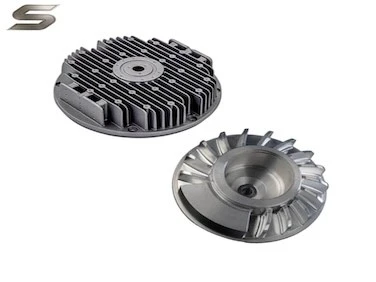
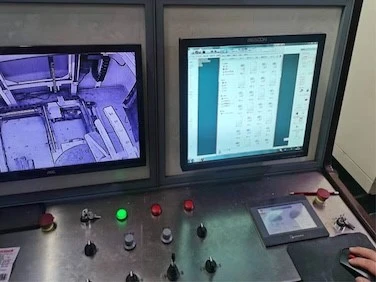
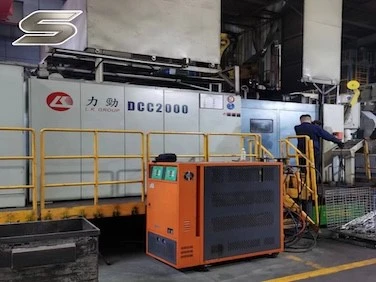
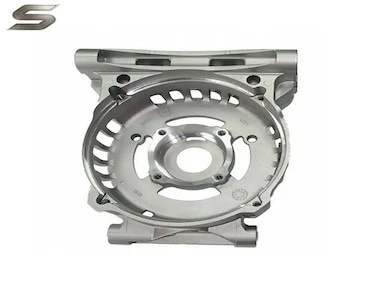
Aluminum Die Casting Motor Housing require a stress-relief process to prevent deformation of the flange surface during prolonged operation. During high-pressure die-casting, molten aluminum fills the mold cavity at high speeds; however, cooling rates vary across different sections of the cavity, leading to the development of residual internal stress. As the motor operates, this stress may relax or redistribute, potentially causing assembly errors, bearing failures, or other malfunctions. To address this, Shata implements the following measures:
Combined Stress-Relief Process: We employ a hybrid treatment approach, integrating staged constant-temperature aging with sub-resonant vibration aging. Given that natural aging is time-consuming and offers limited stress relief, we utilize this multi-stage, composite method. First, the component undergoes constant-temperature thermal treatment to alleviate high-magnitude solidification stresses. Subsequently, after the casting cools, vibration aging is applied to homogenize localized surface stresses, ensuring a stable and uniform internal stress distribution.
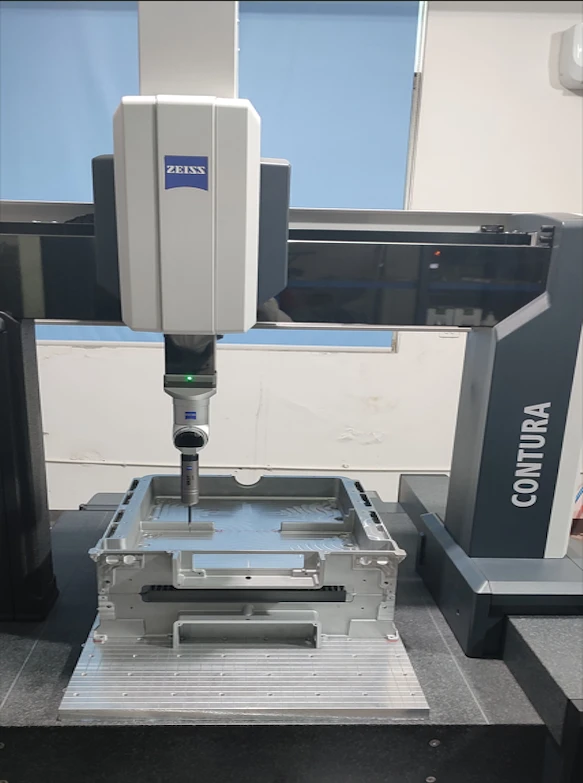
Inspection and Quality Control: Following the stress-relief process, we conduct dimensional inspections. Any component that fails to meet the specified standards is prevented from advancing to the next stage of production, ensuring that every batch adheres to our rigorous quality assurance requirements.
Parameter Matching Standards: It is critical that process parameters are precisely aligned with the specific characteristics of each housing-determined by its unique structural design. Variables such as wall thickness variations, molding techniques, and flange thickness directly influence the required processing parameters. Consequently, ensuring an exact match between these parameters and the product is essential. At Shata, our priority is to guarantee the long-term, stable operation of our clients' equipment.
Services Offered by Shatake
Custom die-casting development for Aluminum Die-Casting Motor Housing based on your provided drawings or 3D CAD models.
Comprehensive solutions including mold development, die-casting, and CNC precision machining.
One-stop surface treatment services, such as sandblasting, powder coating, anodizing, and electrophoresis.
Specialized testing upon request, including airtightness (leak) testing and non-destructive testing (NDT).
Flexible order quantities: from trial sample casting and small-batch production to large-scale supply.
Design optimization support: DFM (Design for Manufacturing) analysis to refine your product structure, minimize die-casting defects, and reduce overall costs.
Hot Tags: aluminum die casting motor housing, China aluminum die casting motor housing manufacturers, suppliers, factory, adc10 aluminum, advanced die casting, aluminum die casting part, aluminum pressure die casting, apex die casting, die cast aluminum s


