


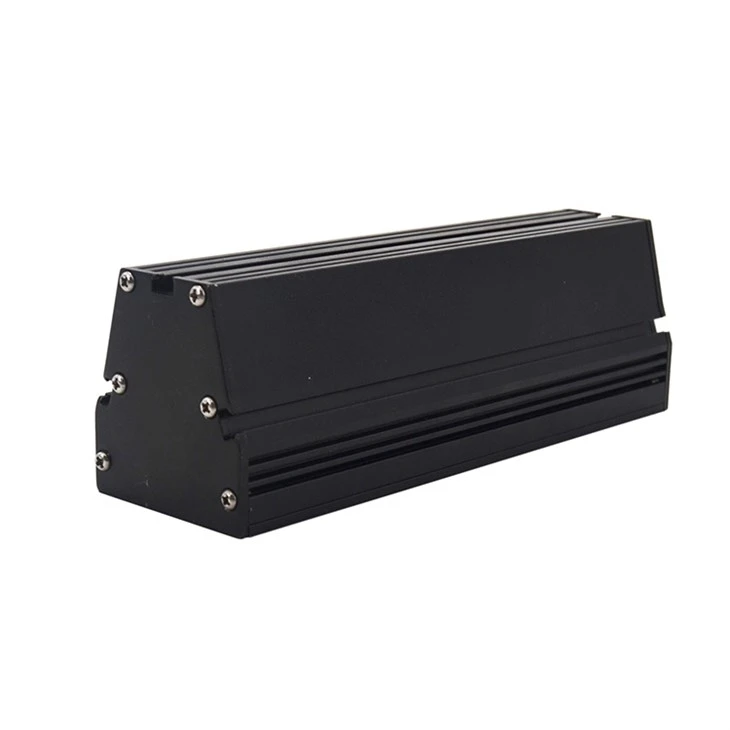


Core advantage - aluminum die casting led light housing
Excellent heat dissipation performance
The thermal conductivity of aluminum alloy is generally 96~98W/(m·K), which is much higher than ordinary engineering plastics. It can quickly conduct and diffuse the heat generated by the LED chip to the surface of the casing and dissipate it into the air, reduce the LED junction temperature, and control the operating temperature of the light source within a safe range, which can significantly reduce light attenuation and extend the overall service life of the lamp.
01
High mechanical strength and good structural reliability
Aluminum alloy is a material with high tensile strength, impact resistance and load-bearing capacity. It does not undergo thermal deformation at high temperatures like plastic, and its structural dimensions are stable under outdoor high temperature conditions. It is suitable for outdoor high-power lamps such as street lamps and industrial and mining lamps, and has a high safety factor in simulation calculations.
02
Strong molding ability for complex heat dissipation structures
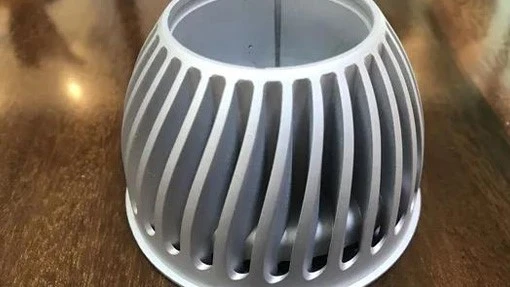
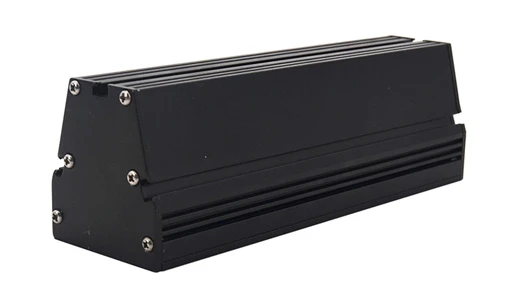
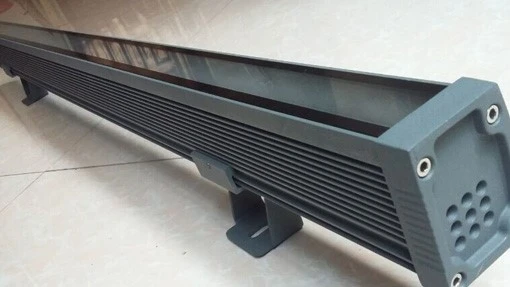
Die-cast aluminum alloy has good fluidity and can be die-cast into complex heat dissipation structures such as fish scale fins to increase the heat dissipation surface area and further improve heat dissipation efficiency. In addition, the integrated shell design can be realized, which facilitates the layout of the installation structure and sealing structure, and it is easy to achieve dustproof and waterproof protection levels.
03
Good temperature resistance
The thermal deformation temperature of engineering plastics is generally only 120-170°C. The aluminum alloy metal material does not have thermal deformation problems in the normal operating temperature range of the lamp. It will not soften or warp under high-power and long-term operation, ensuring that the assembly seal does not fail.
04
Recyclable and environmentally friendly
Aluminum alloy is a recyclable metal with good recycling and reuse performance. After recycling, the performance attenuation is small, which meets the environmental protection design requirements of lamps.
05
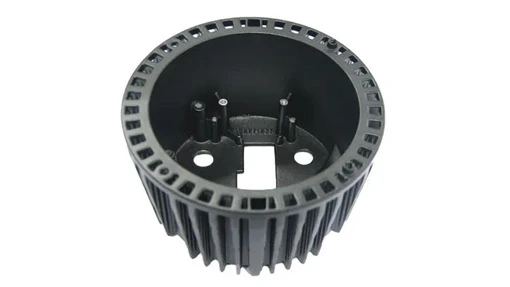
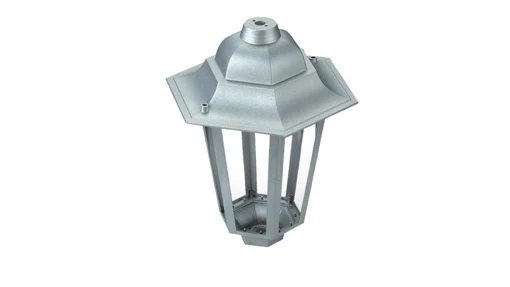
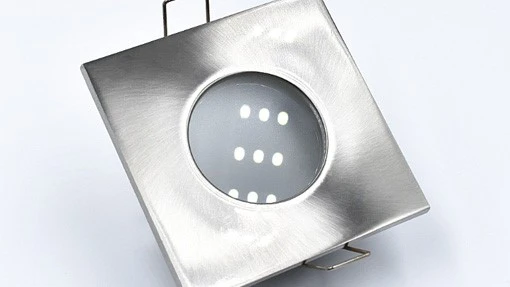
LED lamp housing material selection and structural design
As the key structural component of LED lamps, the housing's material selection and structural design directly affect the performance and reliability of the lamps. Listed below are common LED lamp housing material choices. Each material has special application directions and advantages and disadvantages. You can learn more about it through the following table
|
Material categories |
specific materials |
Density characteristics |
advantage |
shortcoming |
Typical application scenarios |
|
Engineering plastics |
PC (Polycarbonate) PBT (Polybutylene Terephthalate) Modified PA66 |
Density 1.2~1.4g/cm³, light weight, obvious advantages of lightweight |
Light weight, high injection molding efficiency, moderate cost |
Poor thermal conductivity, not suitable for high-power heating |
Indoor small and medium-power lighting, light-transmitting components, and connection buckle structures |
|
Die cast aluminum alloy |
ADC12 aluminum alloy A380 aluminum alloy |
The density is about 2.7g/cm³, the weight is larger than plastic and much lighter than steel. |
Excellent heat dissipation, high strength, and can be used as complex heat dissipation fins. |
It weighs more than plastic, has many processes and is relatively expensive. |
Outdoor high-power street lights, high-power industrial and mining lights |
|
cold rolled steel plate |
Sheet metal cold rolled steel plate SPCC |
Density up to 7.8g/cm³, heavy shell weight |
The lowest price and mature stamping technology |
Heavy weight, high density, weaker thermal conductivity than aluminum |
Large batches of simple structure lamp casings |
The key to selection: Indoor low- to medium-sized power is given priority to modified engineering plastic casing. For outdoor use and high power, aluminum die casting led light housing are preferred. If it is just a simple and low-cost product, sheet metal steel plate can be used. If you want a specific shell solution, you also need to consider weather resistance, flame retardancy, national and regional climate protection, and comprehensive judgment on compatibility with seals or coatings.
aluminum die casting led light housing material composition labeling
Aluminum alloy composition grades ADC12 and A380 are the most commonly used. The following is the chemical element composition percentage (%). This is related to your obvious preference when choosing.
|
Chemical elements |
ADC12(JIS Japanese standard) |
A380(ASTM American standard) |
|
Al |
margin |
margin |
|
Si |
9.6-12.0 |
7.5-9.5 |
|
Cu |
1.5-3.5 |
3.0-4.0 |
|
Fe |
≤1.3 |
≤1.3 |
|
Mg |
≤0.30 |
≤0.10 |
|
Mn |
≤0.50 |
≤0.50 |
|
Zn |
≤1.0 |
≤3.0 |
|
Ni |
≤0.50 |
≤0.50 |
|
Sn |
≤0.30 |
≤0.35 |
|
Sum of other impurities |
≤0.25 |
≤0.50 |
How to clean the aluminum die casting led light housing?
1. Daily light dust removal
For daily dust and spider webs, give priority to dry cleaning. You can use a soft microfiber cloth to gently wipe the surface of the housing, cooling fins, gaps and grooves, etc., and use a soft brush or compressed air to blow away accumulated dust to reduce dust from blocking the heat dissipation surface and ensure the heat dissipation effect of the lamp.
2. Cleaning stubborn stains
(1) Prepare cleaning solution: add a small amount of neutral dishwashing detergent into warm water to prepare mild soapy water.
(2) Soak the microfiber cloth and fully wring it out until it is moist and not dripping, and wipe the stains along the texture of the shell; the gaps between the heat dissipation fins can be lightly brushed with a soft brush dipped in cleaning fluid.
(3) Then use a clean soft cloth dipped in clean water and wrung out to wipe off the detergent residue on the surface of the casing. Residual detergent retained for a long time will accelerate the oxidation and loss of luster of the casing.
(4) After all wiping is completed, use a dry soft cloth to completely dry the casing. No water should remain in the grooves and heat dissipation gaps to prevent oxidation and corrosion of the aluminum alloy.
3. Heavy oil pollution treatment
For heavy oil stains, you can use a soft cloth soaked in 70% isopropyl alcohol to wipe away the oil. After wiping, you must fully ventilate and dry it. Only after the alcohol has completely evaporated can you turn on the power. And it can only be used locally in a small area. It is not recommended to wipe large areas repeatedly.
4. Additional maintenance tips for outdoor aluminum alloy shells
If you use an aluminum alloy casing in an outdoor street light or industrial and mining light, it is recommended to perform basic cleaning every 1-3 months.
If you are close to a coastal salt spray environment, you need to increase the frequency of cleaning to remove salt deposits from the shell in a timely manner.
After you finish cleaning, you can apply a thin layer of car wax to form a protective film to delay oxidation and loss of luster caused by salt spray and ultraviolet rays.
Main production process
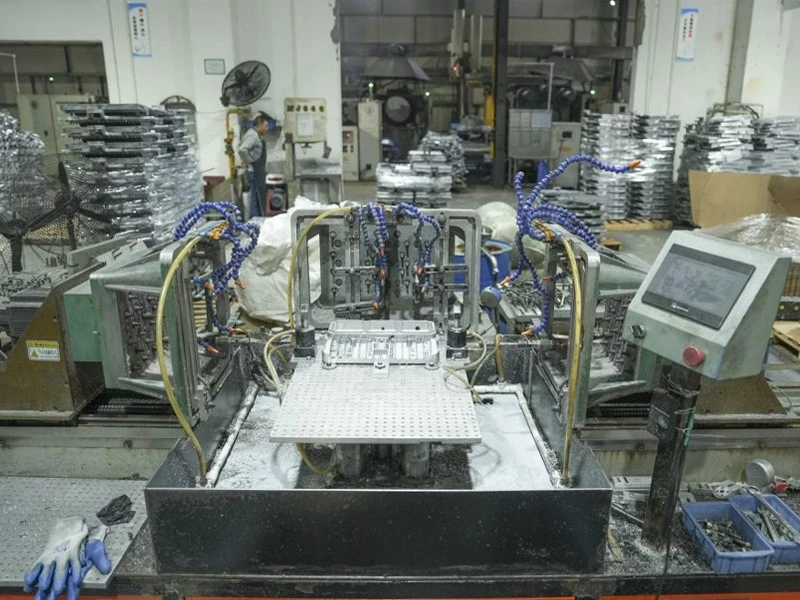
Our aluminum die casting led light housing mainly use the mainstream high-pressure casting process. This casting process is suitable for high-power LED street lamps with fish scale cooling fins, complex cavities, sealing grooves, mounting bosses, and industrial and mining lamp shells. We use high-strength die-cast steel molds to pre-make all complex structures of heat dissipation fins, snap grooves, sealing grooves, and mounting bosses. The specific steps are as follows:
(1) Aluminum alloy melting: We heat the aluminum ingot to 660-700℃ to melt it into liquid aluminum.
(2) High-pressure filling die-casting: The molten aluminum alloy is pressed into the steel mold at high speed under high pressure, cooled and solidified under pressure, and complex thin-walled structures such as the housing body, heat dissipation fins, and bosses are formed in one go. And the pressure ensures that the aluminum liquid fills the small fin gaps to ensure the integrity of the heat dissipation structure.
(3) Demoulding, trimming and deburring: the casting is ejected, excess metal on the flash edge is removed, and the surface is shot blasted.
(4) CNC machining: precision milling of sealing grooves, threaded holes, mounting holes, and wiring openings to ensure sealing plane accuracy.
(5) Powder spraying: It is most commonly used in outdoor lamps to form a protective layer that is resistant to ultraviolet rays and salt spray to prevent oxidation and corrosion of aluminum alloys.
Hot Tags: aluminum alloy die-cast led lamp housing, China aluminum alloy die-cast led lamp housing manufacturers, suppliers, factory


