
Customized mine equipment rail wheels replacement parts
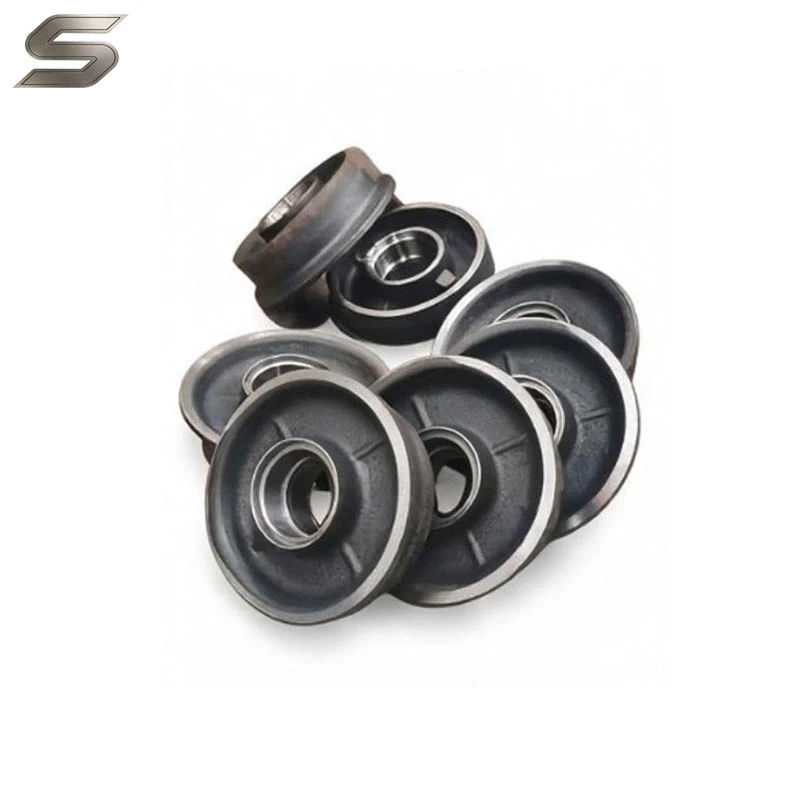
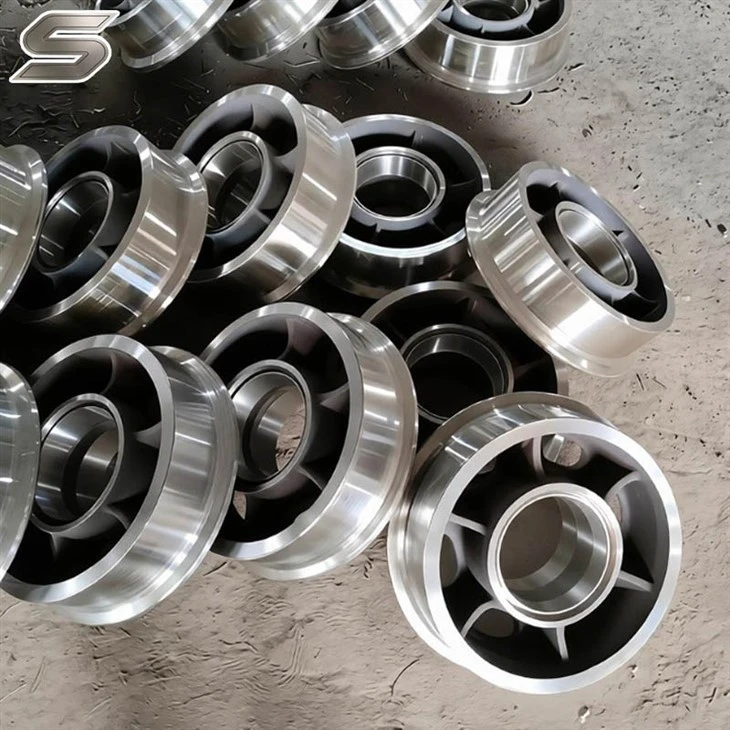
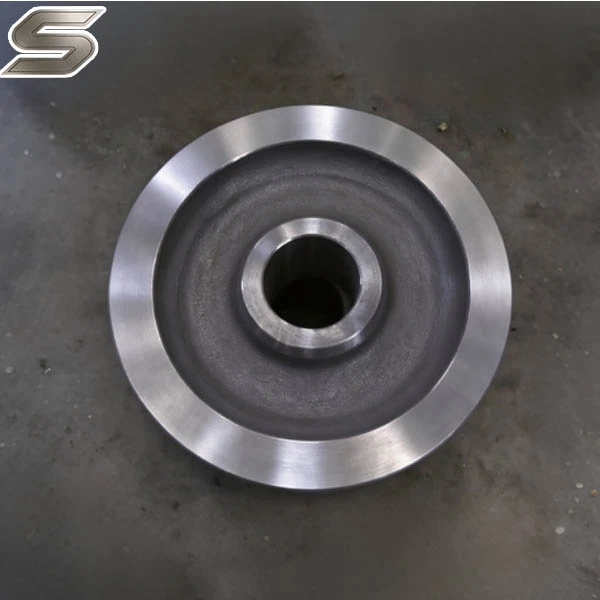
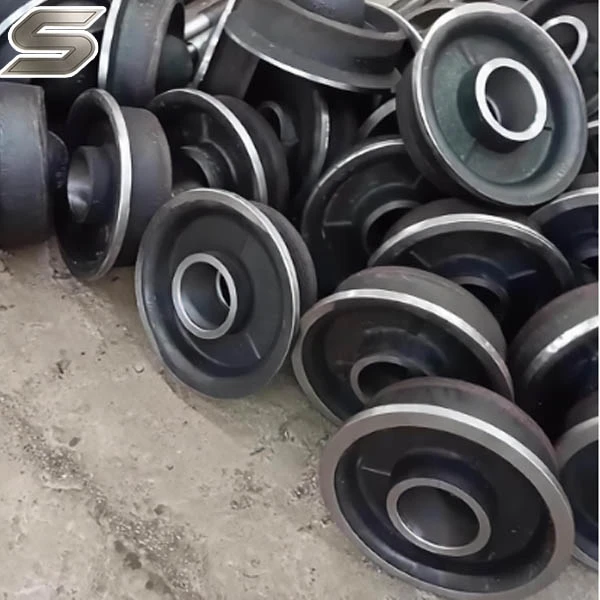
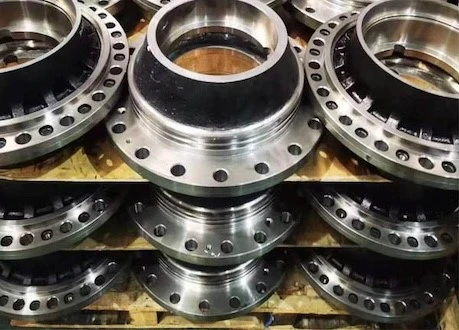
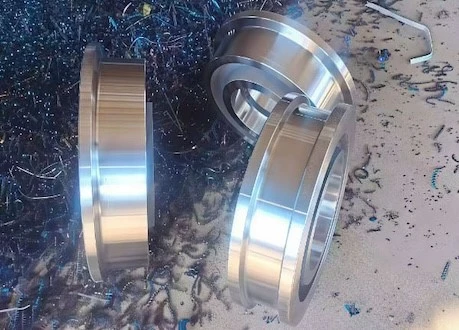
mine equipment rail wheels replacement parts-also known as mine car wheels-serve as the core load-bearing elements in rail transport systems. During operation, these wheels must support the entire weight of the mine car itself, plus the total weight of the cargo being transported. We specialize in customizing rail wheel components specifically for the heavy-duty environments found in mines, ensuring the efficient operation of your transport systems.
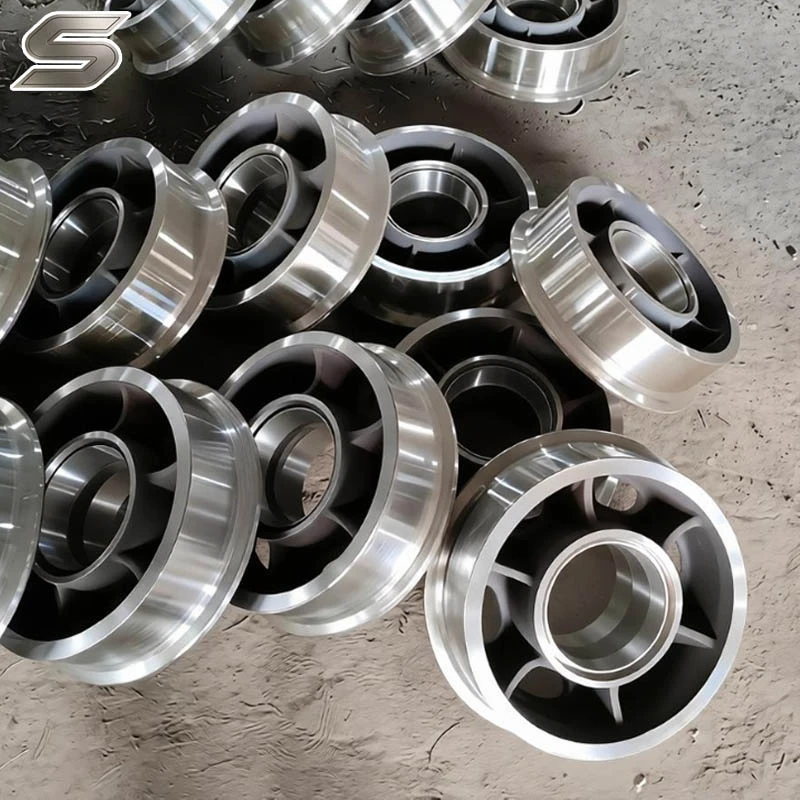
Why use ASTM A27 and ASTM A148 steel grades for rail wheel components?
High Load-Bearing Capacity
Mining equipment rail wheel accessories mainly use two mature grades of materials, ASTM A27 carbon cast steel and ASTM A148 high manganese low alloy cast steel. Since the yield strength and tensile strength of both are ≥250MPa and ≥500MPa, the two materials have outstanding load-bearing capabilities and can fully bear the comprehensive load of mining equipment, and the wheel body is not prone to deformation.
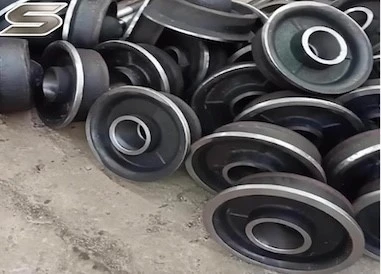
Excellent Impact and Crack Resistance
These materials contain minimal harmful impurities, significantly reducing the risk of brittle cracking in the castings. The relatively high manganese content provides solid-solution strengthening, making the wheels resistant to chipping or cracking when subjected to jolts, frequent starts and stops, or sudden impacts-ideal for the high-impact conditions typical of mining operations.
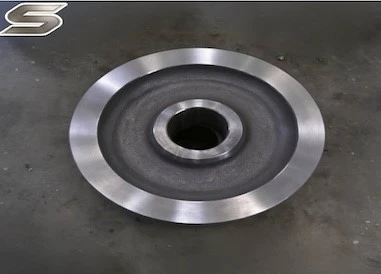
Controlled and Stable Wear Resistance
Following the casting process, the components undergo heat treatment to achieve a hardness of 140–180 HBW. This strikes an optimal balance between hardness and toughness; it prevents brittle fracture (caused by excessive hardness) and rapid wear (caused by insufficient hardness). This effectively mitigates wear and spalling on the wheel flanges and treads, significantly extending the service life of the wheels
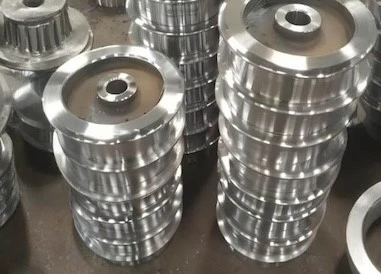
Certified Material Specifications
We offer customization based on your specific operational requirements, including the selection of cast steel grades. We can adjust the proportions of carbon and manganese alloying elements to suit different load requirements. Furthermore, we provide comprehensive documentation-including mechanical property test results, hardness data, and non-destructive testing (NDT) reports-ensuring transparent, verifiable parameters that meet your quality control standards
ASTM A27 and ASTM A148 chemical composition and mechanical index list
|
Trademark |
ASTM A27 |
ASTM A148 |
|
|
Applicable working conditions |
Ordinary minecart |
Heavy load conditions |
|
|
chemical composition |
C |
≤0.25 |
No enforced limits |
|
Si |
≤0.80 |
No enforced limits |
|
|
Mn |
≤1.20 |
No enforced limits |
|
|
P |
≤0.05 |
≤0.05 |
|
|
S |
≤0.06 |
≤0.06 |
|
|
Cr |
Residual, no requirement |
No enforced limits |
|
|
Ni |
Residual, no requirement |
No enforced limits |
|
|
Physical parameters |
Tensile strength Rm |
≥500 MPa |
≥640 MPa |
|
Yield strength ReH |
≥270 MPa |
≥400 MPa |
|
Overview of Common Track Gauges
In mine transport systems, the rated load determines the appropriate track gauge. The most common gauges are 600 mm, 762 mm, and 900 mm. The primary differences between these gauges lie in the track width and the corresponding selection of mine equipment rail wheels replacement parts
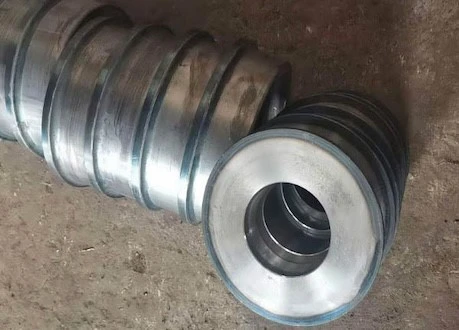
600 mm Gauge
This belongs to the small-scale narrow-gauge system, typically used in small-to-medium-sized coal mines and metal or non-metal mines. It is paired with small, fixed-body or side-dump mine cars. While the rated load capacity is relatively low, this system offers high maneuverability. Wheel diameter, track gauge, axle bore, and keyway parameters can be customized based on specific installation constraints to meet light-to-medium load transport requirements.
762 mm Gauge
This is the most widely used medium-narrow gauge in mining applications. It strikes an optimal balance between tunnel space requirements and transport capacity, and is extensively used in the main underground haulage roadways of coal, metal, and non-metal mines. It is compatible with the vast majority of standard mine cars available on the market, offering excellent versatility for various projects. For standard operating conditions, the material ASTM A27 is the preferred choice.
900mm Gauge
This falls under the category of heavy-duty, narrow-gauge rail systems, designed for the primary transport networks of large-scale mines. It is used in conjunction with heavy-duty flatbed mine cars and high-capacity fixed-body mine cars. Given the high payload per trip, the wheel assemblies are subjected to continuous heavy static loads as well as impact loads at rail joints; consequently, the castings must possess high strength, toughness, and resistance to crushing.
How do you determine when rail wheel components need to be replaced?
mine equipment rail wheels replacement parts are wear parts and must be replaced immediately upon showing signs of failure. Failure to replace them promptly can compromise the reliability and efficiency of the transport system. Below are the primary indicators that a component requires replacement; if your equipment exhibits any of the following, please contact us immediately to order replacement parts.
|
Component Name |
Signs of Failure |
Replacement Required? |
|
Bearing / Bearing Housing |
If you observe: 1. Persistent, dull, abnormal noises during operation or recurring, rhythmic sounds that do not improve after lubrication. 2. Noticeable play, wobbling, or lateral shifting of the wheel assembly when manipulated by hand. 3. Abnormal temperature rise in bearings; grease appearing blackened or contaminated with metal particles. 4. Pitting or spalling on raceways or balls; binding or sticking during rotation. |
Replace immediately. |
|
Seals |
If any of the following occur: 1. Persistent grease leakage or oil seepage. 2. Inspection reveals the ingress of mud, water, cinders, or dust into the bearing cavity. 3. The seal lip shows signs of aging, cracking, deformation, or damage. |
Replace |
|
Parallel Keys/Keyways |
If any of the following occur: 1. Key exhibits shear deformation, crushing, wear, or "rolling" (slippage within the keyway). 2. Relative slippage between the wheel and axle, or noticeable impact/jolting during startup or shutdown. 3. Compression damage to the side walls of the keyway. |
Prioritize replacing the parallel key |
|
Bushings/Sleeves |
If any of the following occur: 1. Scoring, abrasion, or excessive wear on the inner surface, resulting in clearance beyond specified limits. 2. Cracking, delamination, or localized spalling of the bushing. 3. Wear causing eccentricity (off-center positioning) of the wheel. |
Replace promptly. |
|
Wheel Tread |
If tread wear exceeds the limits specified in equipment maintenance standards, or if the surface exhibits indentations, extensive spalling, or material fragmentation. |
Replace the entire cast rail wheel. |
|
Wheel web/hub |
If cracks are visible to the naked eye on the hub or web, or if internal cracks are detected via non-destructive testing (NDT). Additionally, if the hub bore shows severe compression deformation, ovality, or scoring. |
Replace the entire cast rail wheel. |
CONTACT US NOW!
Are you struggling with rail wheel components that don't fit, or having trouble finding parts suitable for heavy-duty operating conditions? Are you starting a new project and unsure where to begin? Or perhaps your current components are failing to meet your operational goals? If any of these apply to you, contact Shata immediately!
We specialize in custom-cast steel components for the mining industry. We can tailor parts to your specific equipment parameters and operating conditions-we even offer custom development for non-standard gauge components!
Simply send us your drawings, samples, or on-site technical parameters. We will provide a free assessment of your operating conditions and deliver a professional, customized solution for your mine equipment rail wheels replacement parts!
Hot Tags: mine equipment rail wheels replacement parts, China mine equipment rail wheels replacement parts manufacturers, suppliers, factory


