


When I first started as an investment casting supplier over a decade ago, I’d get the same question at every industry trade show: “Why should I choose your process over die casting or sand casting?” Back then, I’d fumble through technical details about surface finish or dimensional accuracy, but the real answer clients cared about—above all other factors—was cost. Today, after working with everything from energy storage battery components to 304 stainless steel hinges, I’ve learned that comparing investment casting costs to other methods isn’t just about raw price; it’s about the total cost of ownership, part complexity, material, and production volume. Let’s break this down, using real parts we’ve produced for clients and industry data to make it clear.
First, let’s set a baseline: investment casting, also called precision casting, works by creating a wax pattern of a part, coating it in ceramic, melting out the wax, and pouring molten metal into the cavity. Die casting forces molten metal under high pressure into reusable steel dies, while sand casting uses compacted sand around a pattern to create a cavity. Each process has distinct cost structures that shift dramatically based on what you’re making.

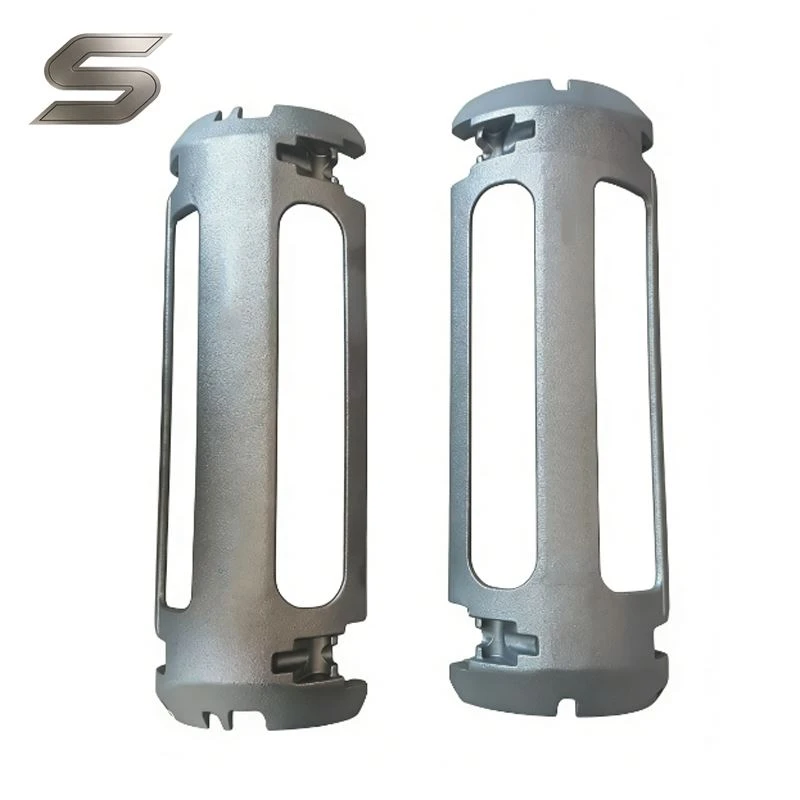
Let’s start with up-front tooling costs, because that’s where the biggest initial differences lie. For die casting, the steel die is custom-machined and can cost anywhere from $5,000 to $50,000 or more, depending on part size and complexity. Sand casting patterns are usually cheaper, running $500 to $5,000 for a single set of patterns. Investment casting tooling—those wax molds—land in the middle, typically $2,000 to $20,000 for a single cavity, with multiple cavity molds scaling higher. But here’s the catch: that initial tooling cost only tells half the story if your part is complex. Last year, we worked on a die cast aluminum housing for energy storage batteries—you can see the part here: Die Cast Aluminum Housing For Energy Storage Batteries. That part had tight tolerances and a unique, irregular shape; when the client switched from sand casting to die casting, they saved on per-unit costs, but their tooling ran $75,000 for two dies. They later realized we could produce a similar part via investment casting with tooling that came in 60% lower, because we use silicone rubber mold inserts for small to medium runs that eliminate the need for custom steel dies.
Per-unit production costs are where volume becomes the deciding factor. For runs over 10,000 parts, die casting usually wins on per-unit price. The high tooling cost is spread across thousands of units, and die casting’s production speed is unbeatable—up to 100 parts per hour for small aluminum parts. But for runs under 10,000 parts, investment casting is almost always cheaper. Why? Investment casting doesn’t require expensive steel dies, so the fixed cost isn’t spread thin on low volume, and our ceramic process avoids the lead times of die making. We’ve seen this with ISO Certified Carbon Steel Investment Castings used for agricultural equipment brackets—for a run of 2,000 parts, die casting would have cost 30% more per unit because the tooling was a large upfront expense that didn’t amortize over a small quantity. That’s a key point I drill into every client: low-volume, high-complexity jobs are investment casting’s sweet spot for cost, while high-volume, simple parts lean toward die casting.
Material costs add another layer to the comparison. Investment casting works with almost any metal alloy—carbon steel, stainless steel, aluminum, brass, even exotic alloys for aerospace. Our ISO Certified Carbon Steel Investment Castings and Investment Cast 304 Stainless Steel Hinges, for example, use high-quality alloys without the material waste that plagues other processes. Die casting works best with non-ferrous metals like aluminum and zinc, so if you need a ferrous part, you’re limited. For a client making All Cast Cross Coupling Cable Protectors—part of a power transmission system that needs corrosion resistance—they couldn’t use die casting’s aluminum alloy; stainless steel or carbon steel was non-negotiable. Investment casting’s ability to handle ferrous alloys directly eliminated the need for secondary processing that other methods would have required, cutting their total material cost by 15% because there’s no intermediate machining to add material.
Wait, I know what some of you might be thinking: “Investment casting has more secondary operations, so doesn’t that add cost?” It’s a fair question, and it’s why total cost of ownership matters more than just per-unit casting cost. Let’s use Investment Cast Stainless Steel Valve Bodies as an example. If you made that valve body via sand casting, you’d spend 5 hours per part machining to get the internal passages and flange dimensions right. Die casting would require 2 hours of machining, but you’d have to deal with die flash and porosity that needs extra polishing. Our investment cast valve body? The process produces near-net shape parts, so machining time drops to 45 minutes per unit. Even if the initial casting cost for investment casting is $2 more per part, the machining and finishing cost is $3 less—net, you save $1 per unit. That’s a common mistake clients make: only looking at the casting cost, not the downstream costs that can make a “cheaper” process more expensive overall.
Porosity and dimensional accuracy also tie into long-term cost. Die casting has low porosity, so parts are strong, but for complex shapes, you can get trapped air that weakens the part and requires inspection. Investment casting has almost no internal porosity because the ceramic mold is porous, letting gases escape, which means parts are more reliable for high-stress applications. For the energy storage battery housing I mentioned earlier, the client had a 2% failure rate with die casting due to porosity issues, requiring 100% testing and rework. When they switched to our investment casting process, the failure rate dropped to 0.2%, so they saved on inspection and warranty costs over the life of the product. That’s a cost component that’s easy to overlook when comparing methods, but it adds up over thousands of units.
Lead times are another cost factor. If you need a part in 4 weeks, die casting is not your fastest option—tooling lead times for dies can be 8 to 12 weeks, while investment casting wax tooling takes 2 to 4 weeks. Sand casting is even faster, but the surface finish and tolerance limits mean you’ll need more machining. Last quarter, a medical device client came to us needing 500 custom brackets in 5 weeks. Die casting would have taken 10 weeks for tooling, making it impossible to meet their deadline. Sand casting would have taken 6 weeks, but their tolerance requirement of +/- 0.005 inches was too tight for sand casting. We delivered the investment cast parts in 3 weeks, no tooling delays, and their total project cost was 20% lower than if they’d gone with die casting, because they avoided a 6-week production delay that would have pushed their product launch back and cost them $50,000 in missed revenue.
Now, let’s put this all together into a real-world breakdown for common scenarios. If you need:
- High-volume (10,000+ units), simple shape, non-ferrous metal: Die casting is cheaper overall, with low per-unit cost after tooling amortizes.
- Low-to-medium volume (100-10,000 units), complex shape, any metal alloy: Investment casting is cheaper, thanks to lower tooling costs and less secondary processing.
- Large, low-tolerance parts, high volume: Sand casting wins, as it has the lowest tooling cost for very large parts, even if per-unit cost is higher.
I’ve seen clients waste tens of thousands of dollars by picking the wrong process. One auto parts maker tried die casting for a set of custom brake calipers that needed tight tolerances for hydraulic seals. Their tooling cost was $60,000, and per-unit casting cost was $15. The machining required to fix porosity and get the seal surface right added $10 per unit, making total per-unit cost $25. When they switched to investment casting, tooling was $25,000, casting cost was $10, and machining was $7—total per-unit cost $17, which was 32% lower, even for a run of 50,000 parts. The difference was that the part’s complexity made investment casting’s lower secondary costs outweigh die casting’s faster production.
Of course, investment casting isn’t perfect. For parts over 50 pounds, the ceramic process can get expensive, and lead times for large investment cast parts can stretch. For simple, flat parts like brackets, die casting will always be cheaper. But for any part that has curves, internal passages, intricate details, or requires multiple metals, investment casting often comes out ahead when you factor in total cost.
At the end of the day, the cost comparison isn’t a one-size-fits-all answer. That’s why we work with clients every step of the way: we take their part drawings, run cost estimates for each possible process, and point out the hidden costs that most suppliers miss—warranty claims, rework, launch delays, inspection—because those are the expenses that eat into your bottom line. If you’re evaluating investment casting against die casting, sand casting, or another method for your next project, we’re here to help you break down the numbers, not just pitch a process. Reach out to our team to discuss your requirements and get a personalized cost analysis for your parts.
References
- American Foundry Society. (2022). Investment Casting Cost Guide: Tooling, Production, and Total Ownership Costs.
- Die Casting Development Council. (2023). Comparative Cost Analysis of High-Volume Casting Processes.
- Precision Metalforming Association. (2021). Secondary Operations Costs in Casting Processes: A Case Study of Automotive Components.
- Energy Storage Industry Association. (2022). Cost-Benefit Analysis of Battery Housing Manufacturing Methods.